 Jason Edwards – Interviews
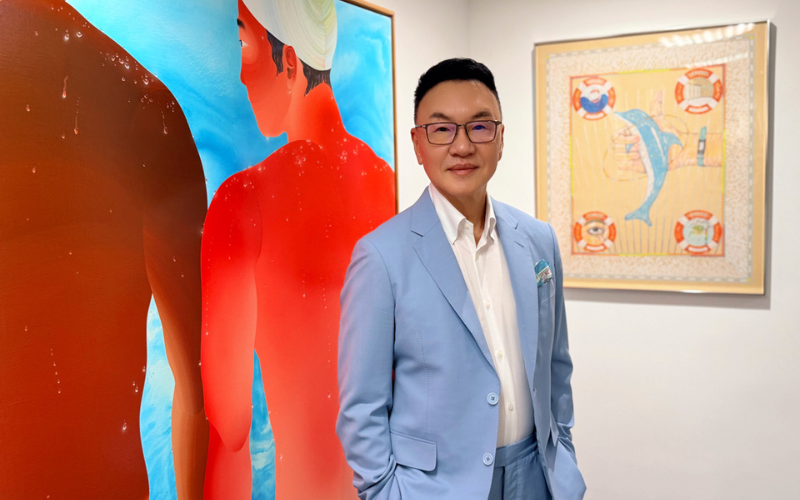
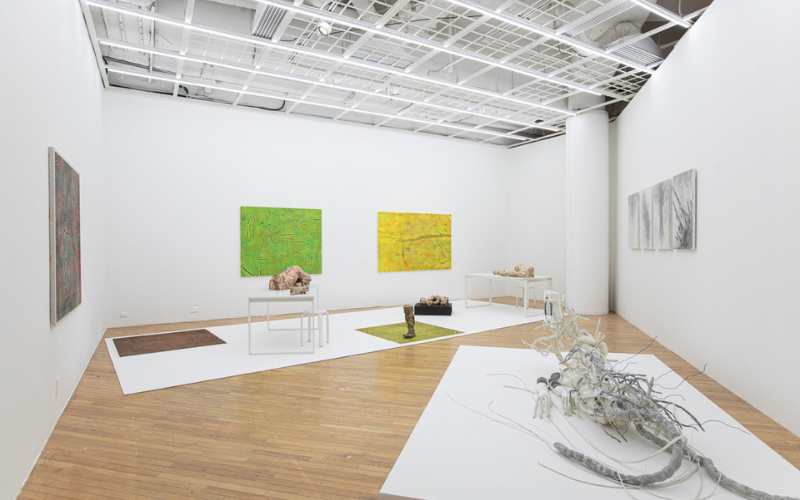
There are projects that attract attention because they make noise, and others because they create a space where something real actually happens. The Sunpride Foundation clearly belongs to this second category. For over ten years, Patrick Sun, Founder and Executive Director of the Sunpride Foundation, has been moving forward with a simple yet ambitious idea: using art to bring visibility to lives and identities that many still prefer to keep in the shadows. Not by provoking, not by seeking conflict, but by opening places where people can look, feel, and sometimes ask themselves questions they would never have formulated elsewhere.
When I discovered Spectrosynthesis Seoul, it wasn't just the scale of the exhibition that struck me, but the way it invited visitors to slow down. You could see people stopping in front of an artwork, remaining silent, and then exchanging a few words with the person next to them. An elderly woman wondering why she sees "so many queer people today," a mother calmly explaining gay parenting to her child... These are simple, almost trivial scenes, but they speak volumes about how art can open doors that public debate often leaves closed.
It is this type of moment that prompted me, from Luxembourg where I fight for the rights and dignity of every person, to contact the Sunpride Foundation on July 15. Their work resonates with what I defend every day: visibility, respect, and the conviction that art can truly transform how we look at one another. Not with slogans, but with images, stories, and emotions that linger.
1. Mission and Foundation History
Patrick Sun: The Sunpride Foundation was created in 2014 with a mission to increase visibility and respect towards the LGBTQ+ community through collecting and exhibiting art. To date, we have organized four major exhibitions in prominent Asian institutions: in 2017 at MOCA Taipei, in 2019 at Bangkok Art and Culture Centre, in 2022 at Tai Kwun Hong Kong, and most recently in Seoul at Art Sonje Center. The title of our exhibition series, Spectrosynthesis, combines "spectrum" and "photosynthesis"—signaling both the diversity of the LGBTQ+ community and our desire to cultivate positive energy through creative exchange. Our ultimate goal is to contribute to a stronger, healthier, and more equitable world for LGBTQ+ individuals and their allies.
2. Supporting LGBTQ+ Artists Globally
Patrick Sun: Our primary commitment is public exhibition—creating platforms where artists can be seen through the Spectrosynthesis series. We collaborate with major art institutions and engage local curators to ensure that the presented works are rooted in local contexts and respond to the unique cultural urgencies of each region. Beyond collections and commissioned works, we also support artists in their participation in other art events—for example, Dew Kim at the upcoming Busan Biennale, Isaac Chong Wei at the 2024 Venice Biennale, or Wu Tsang at the Guggenheim in 2021. We also advocate for the acquisition of works by LGBTQ+ artists through my personal connections with international institutions such as Tate, Guggenheim, and M+.
3. Curatorial Criteria and Values
Patrick Sun: Since our mission is to increase visibility and respect for the LGBTQ+ community in Asia, our first criterion is naturally to support projects and artists who share this objective. Another criterion is the quality of the artwork. Even if we do not know whether a piece will ever be exhibited in a museum, we always begin with the hope of identifying works that could reach that level. For me, collecting quality art aligns with our social mission. Of course, what is considered "good" remains subjective, but we hope that when visitors discover our exhibitions, they share our conviction that these works are important and relevant to be shown to the public. As a collector, I am always seeking works that are both socially meaningful and artistically solid.
4. The Role of Art in Diversity and Dialogue
Patrick Sun: Art can accomplish what activism alone cannot always achieve. It creates a space where people can approach difficult topics slowly, without the pressure of a debate or confrontation. It opens dialogues rather than demanding agreement. I have witnessed it personally: an elderly woman asking me if "being gay is a trend" because she sees "so many queer people today" in Hong Kong, or a young mother explaining gay parenting to her five-year-old son in a Taipei museum. These moments do not happen in the middle of a political argument. They are born in the quiet of a gallery. Art builds bridges between communities by showing that our shared humanity is deeper than our differences—that, in my view, is the true power of art.
5. Spotlight on Spectrosynthesis Seoul
Patrick Sun: The most recent, and undoubtedly the most significant, is Spectrosynthesis Seoul, which concluded on June 28 at Art Sonje Center. It was the first major institutional exhibition in Korea dedicated to queer themes, bringing together 74 artists—including nearly 50 from Korea. Co-curated by Sunjung Kim and Yongwoo Lee, the exhibition transformed the entire museum into a space of queer visibility, utilizing not only the galleries, but also corridors, the theater, and outdoor spaces. This exhibition illustrates everything we believe in: local leadership, artistic excellence, and the power of art to deeply touch visitors.
6. Evolution of Visibility in Asia vs. Europe
Patrick Sun: The evolution varies by region. In Europe, the conversation has existed for longer, with more institutional support and market recognition. But even there, nothing is taken for granted. In Asia, the progress is more uneven—some cities have made remarkable strides, while others remain challenging. What I have observed through the Spectrosynthesis series is that visibility is not a straight line. It moves forward, then pauses, sometimes steps back. But the general trend is clear: more institutions are engaging, more artists are speaking out, and more audiences are ready to listen. In Seoul, we met amazingly courageous young artists ready to make their voices heard. That gives me hope.
7. Challenges in Cultural Advocacy
Patrick Sun: The challenges are real and diverse. In some countries, legal restrictions make it impossible to openly present queer exhibitions. In others, the challenge lies in finding institutional partners with the vision required to push social and cultural boundaries. Even when we find partners, we must remain mindful of local political and religious contexts. We also face the challenge of sustainability: queer art is not yet considered a priority by many major collectors and institutions, which makes funding and institutional backing uncertain. Finally, there is the challenge of visibility itself: how to reach audiences beyond those who are already aware? How to engage skeptics or simply uninformed individuals? These are difficult questions, but essential to our mission.
8. Future Horizons and Upcoming Projects
Patrick Sun: Our priority is to maintain the momentum of the Spectrosynthesis series. The next edition will open at the Museum of Contemporary Art Tokyo in February 2027, and we plan to bring the series to other Asian cities thereafter. Regarding collection, we pay special attention to young artists and historically underrepresented voices in queer art, particularly female, transgender, and non-binary artists. We also wish to deepen our archival and research work, and we are actively exploring virtual formats to reach audiences in regions where physical exhibitions remain difficult.