
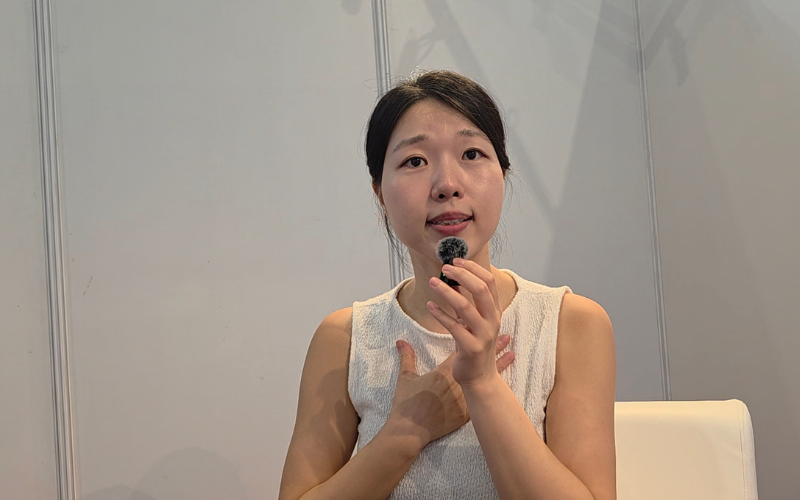
Born and raised in Seoul and now based in Paris for more than a decade, pastry chef Sora Lee has built her career around one idea: sharing Korean culture through taste. From childhood street‑food memories to modern Franco‑Korean creations, she brings the two countries together through her weekly classes, demonstrations and signature desserts.
Invited to Korea Expo 2026 on June 18 at Paris Expo Porte de Versailles, she spoke with us about her journey, her work, and the growing curiosity of European audiences for Korean flavors.
In Korea, I naturally grew up surrounded by Korean cuisine and ingredients. When I arrived in France, I discovered a very rich gastronomic culture and learned a lot. In 2019, I founded Dessert Monde in Paris to share the joy of desserts and to create original creations blending French and Korean gastronomic cultures.
Today, I teach French pastry every week, but also Korean pastry to French students. To do this, you need to master both culinary cultures.”
In Korea, gastronomy often begins with street food: tteokbokki, bunggeoppang, hotteok… For us, these are not just dishes, they are memories. And I want to share that value with French people.”
I created a Franco‑Korean dessert called the ssuk and injeolmi roll cake. It was presented on French television — the first time Korean ingredients appeared in a pastry recipe on French TV. This is my strength and my project.”
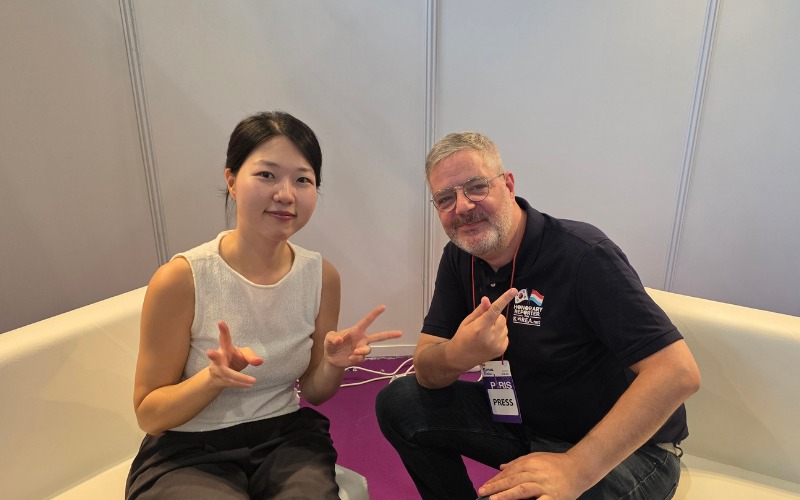
I presented a very popular Korean dessert, the Dubuai Jeon‑de Cookie. I wanted to show a dessert that is very trendy in Korea right now.
I also want to show that trends born in Korea can appeal to the entire world. My biggest hope is to see Korean ingredients naturally find their place in European cuisine. This is also why I presented a Korean‑inspired reinterpretation: the Dubai Chewy Cookie with black sesame.”
I want to continue sharing Korean gastronomy in Europe. Earlier today, I met a young woman from London who invited me to participate in a Korean event there. Maybe I will soon be working in both Paris and London. And why not Germany, Italy, or even Luxembourg.
Every new opportunity motivates me, even if settling in Paris as a foreigner can be difficult. I do my best and enjoy this beautiful moment.”
Through her desserts and her teaching, Sora Lee has built a living bridge between France and Korea. Moving between two identities and two culinary traditions, she continues to build connections with passion and purpose. For her, cooking is more than technique — it is memory, culture and storytelling.