Exploring how the New York Asian Film Festival champions diverse Korean narratives and builds lasting cultural bridges. Every summer, New York transforms into a unique crossroads where curious moviegoers, cinema enthusiasts, and films from across Asia meet. The New York Asian Film Festival (NYAFF), which started modestly with a handful of programmers convinced these movies deserved to be seen, has evolved over time into an eagerly anticipated event. What strikes you when you attend is not only the diversity of the films, but the energy behind it: a genuine desire to share, transmit, and create a space where works can connect with audiences that might never have discovered them otherwise.
The festival has never sought to divide genres or generations. You can seamlessly transition from a restored classic to an independent debut feature, and then to a Korean blockbuster without anything feeling out of place. It is this blending of styles, eras, and sensibilities that defines NYAFF’s identity. It feels like traversing a living cinematic landscape, where every film tells a distinct facet of what Asian cinema can be today.
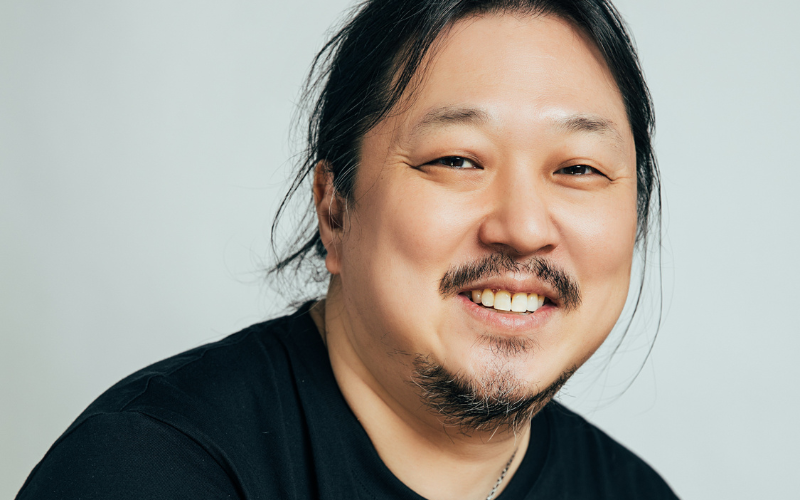
This year, Korean cinema holds a particularly prominent place. Not out of a obligation to "do Korean," but because it continues to offer a rich variety of voices and narratives that speak to a broad audience. Thrillers, historical dramas, queer cinema, melodramas, comedies, and auteur cinema all coexist and respond to one another, making the selection remarkably dynamic. To better understand this vision and programming effort, we had the privilege of speaking with Samuel Jamier, President of the NYAFF Foundation, on July 26. His personal and professional insights shed light on the festival’s mission, recent trends in Korean cinema, and how these films build cultural bridges between Korea and the United States.
1. How would you describe NYAFF's mission today?
Samuel Jamier: “NYAFF remains faithful to its founding principle: sharing films close to our hearts and creating the best possible conditions for audiences to discover them. This principle has never changed, even as the festival grew and professionalized. Today, this means providing a vibrant picture of Asian cinema in all its diversity, allowing New York audiences to encounter works they might otherwise never see. We want to show popular films made with conviction, independent debut features, and restored classics, placing them in the same theaters to foster a natural dialogue across generations and sensibilities. This year, My Sassy Girl and The Chaser stood alongside 3670, Hallan, and Frosted Window, illustrating this commitment. The presence of filmmakers is also essential. A screening changes completely when the audience can converse directly with the person who created the film. That conversation and energy cannot be replicated on a smartphone or a streaming platform. This human connection is the core strength of the festival and justifies its existence.”
2. What makes Korean cinema so special within the festival?
Samuel Jamier: “Korean cinema is deeply personal to me. As an adoptee raised in Brittany, films were one of my first windows into Korea, long before I lived there or learned the language. They showed me its modernity, historical depth, comedy, violence, sensitivity, and political divisions—sometimes within a single movie. That is why I have always resisted reducing Korean cinema to a single genre or ‘national brand.’ Its strength comes from its breadth and the surprising fluidity between commercial and auteur traditions. Korean directors navigate effortlessly between thrillers, melodramas, comedies, horror, or historical films, often within the same project. Historical traumas, class struggles, family obligations, and political rifts are woven into these narratives without turning the films into lectures. Korean films can shift emotional registers multiple times while remaining cohesive. Even an imperfect film is rarely boring. This creative dynamism explains its unique place in our programming and the audience's deep attachment to it.”
3. How do you select Korean films and directors for the program?
Samuel Jamier: “Selecting Korean films involves monitoring various industry sectors: major theatrical releases, independent productions, festival highlights from Busan or Jeonju, emerging directors moving from series, restorations, and diaspora cinema. Our programmers watch as much as possible, then compare notes, debate, change minds, and establish an editorial line. The first question is: does the film stay with us after the screening? Next, we consider its impact on a New York audience, what it brings to the overall lineup, and whether it provides access to a side of Korean cinema the public might not otherwise encounter. Colony or Hope had the scale and blockbuster energy for major screenings. The King’s Warden reflected local Korean audience tastes, which is crucial since domestic hits are sometimes overlooked internationally. Hallan and My Name address the Jeju April 3 Incident through two distinct cinematic traditions. 3670 explores a rarely depicted queer Seoul. Frosted Window represents a quieter, literary direction. We want films to complement, contradict, and answer each other, forming a sincere and intentionally multi-faceted portrait of the country.”
© JEONJU IFF / NYAFF Festival
4. What trends do you observe in recent Korean cinema?
Samuel Jamier: “Financing has become more cautious: mid-budget films are disappearing, and major companies are betting on fewer but larger projects. This makes it harder for younger directors to transition to more ambitious films. Proven formulas are often repeated until exhaustion, whether police comedies, social allegories, or high-concept thrillers. However, Korean audiences are demanding and tire quickly, forcing the industry to constantly innovate. Certain directors are pointing to new paths: Ha Myung-mi transitions from rural violence in Her Hobby to historical scale in Hallan; Park Joon-ho links defectors and the queer community in 3670; Kim Jong-kwan continues his literary cinema of Seoul built around life’s quiet dramas. The pressing question is whether these directors will be given enough space for their next projects. The system must allow them to keep creating, or part of Korean cinema’s vitality risks fading.”
5. How does the festival support independent Korean filmmakers?
Samuel Jamier: “A great film can be overlooked simply because the director is unknown. Our festival tries to reduce that hurdle by offering prominent premieres, packed theaters, solid Q&A sessions, and visibility among distributors, producers, and programmers. Support also means investing in long-term relationships. We want to welcome filmmakers back with their second or third, perhaps more ambitious, films, rather than celebrating them once and forgetting them. Overall, independent Korean filmmakers need a production and distribution ecosystem that allows them to continue making features and showcasing them both in Korea and abroad. A successful screening in New York can provide proof of audience, media coverage, and international interest. It is concrete support, even if it cannot replace a robust industrial infrastructure.”
6. How does the festival help build cultural bridges between Korea and the United States?
Samuel Jamier: “Cinema enables unique exchanges: for two hours, a film immerses the audience in someone else's life, fear, grief, or home. It provides an emotional entry point unachievable in other media. This year, many New Yorkers discovered the Jeju April 3 Incident through Hallan and My Name without prior historical or political context. We also program Korean-American experiences in the same lineup: Andrew Ahn, Justin H. Min, and others. In New York, Korean cinema naturally includes themes of migration, adoption, diaspora, and mixed identity. Jeju’s landscapes, the queer social sphere of 3670, and Korean-American family dynamics offer tangible anchors for audiences. That is how lasting cultural bridges are built, extending far beyond the festival’s duration.”