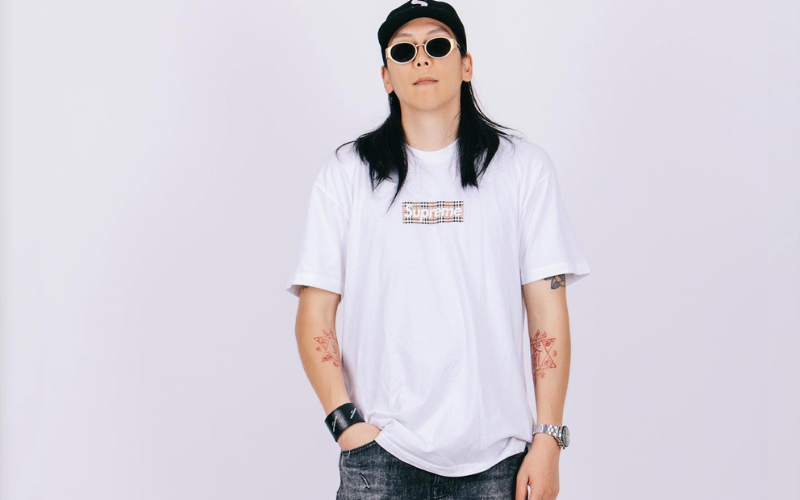
While preparing coverage for the Montreal Korean Cultural Festival (MKFCM) taking place in August, one name came up repeatedly in discussions with organizers and industry insiders: MOOBEK. An open-format DJ, producer, and active figure in the North American K-culture scene, he has built a solid reputation through performances in iconic venues and an unwavering commitment to sharing Korean culture abroad.
Discovering his trajectory reveals a striking fact: behind his high-energy sets and versatile style lies a career spanning over 26 years—marked by travels, encounters, and stages where very few Korean artists have ever had the opportunity to perform. Ahead of his appearance at the MKFCM, it felt essential to give a voice to an artist who lives Korean culture daily and shares it across international stages.
This interview was born from a desire to understand his journey, his perspective on the spread of K-culture, his most memorable experiences, and how he prepares for his arrival in Montreal. In this conversation, MOOBEK reflects on his beginnings, his influences, his projects, and the unique challenges of being a Korean artist operating internationally.
1. To start, could you briefly introduce yourself and tell us how you began making music?
MOOBEK: “Hello, I am DJ MOOBEK. I am an open-format DJ and producer, and I have been working in this field for over 26 years. I am also the director of KCORE PRODUCTION INC, where I design and produce K-culture content and events in North America. I started music very young while attending school in Korea. At home, I listened to a lot of American pop music—first on vinyl, then on cassette tapes, and later on CDs. At that time, certain tracks were hard to find in Korea, so my cousins living in the United States sent me cassettes and CDs of hip-hop and pop. Thanks to this exposure, I started dreaming of becoming a producer during middle and high school. At the same time, the idea of directly sharing the tracks I loved with people appealed to me deeply. The role of a DJ, capable of transmitting an vibe and introducing new sounds, felt naturally made for me. That is how I began DJing.”
2. Why did you want to share Korean music abroad, particularly in Canada?
MOOBEK: “I have worked with many genres over the years, but I believe that when introducing Korean culture and music to North or South American audiences, the message feels most authentic when delivered by someone who grew up within that culture. For instance, when I play American hip-hop, it carries a different weight than when performed by an African American artist who was born and raised in that culture. The depth and context behind the music are different. In the same way, Korean culture is best conveyed by someone who has lived it. Long before K-culture gained global popularity, I was already presenting it abroad. Cities like Montreal or Toronto, where many cultures coexist, are ideal places for Korean music to meet new audiences. Interest in K-culture is growing rapidly there, and I wanted to be part of this movement while showcasing my own style.”
3. How would you describe your musical style and the influences that shaped you?
MOOBEK: “My style is open-format: I do not restrict myself to a single genre. I seamlessly transition between K-pop, hip-hop, EDM, and other styles, reconstructing my sets spontaneously based on the crowd's energy and atmosphere. After more than 26 years of touring, I realized that while having a prepared set is important, every event features a unique audience and vibe. Reading the room in real time is far more essential. I prioritize the audience's reaction, building the musical flow on stage according to what people are feeling and expecting at that exact moment. That is the core of our approach.”
4. You will perform at the Montreal Korean Cultural Festival. What does this event represent for you?
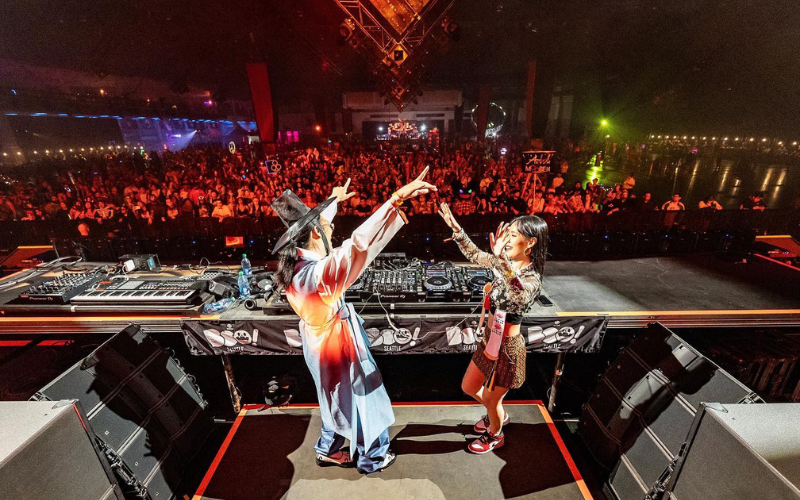
MOOBEK: “Taking the stage in Montreal as part of this tour is a wonderful opportunity to share the experience I have gained organizing K-culture events across North America. This time, I am touring with Korean creator Kang Woo-in, and I believe combining two generations will bring an even more dynamic performance to the stage.”
© MOOBEK
5. What role does Korean culture play in your work, and how do you incorporate it into your projects and performances?
MOOBEK: “Korean culture is the foundation of my work and my identity. Beyond simply playing music, I have integrated Korean culture into numerous official events in the United States: official Korean government ceremonies (such as DJing for the Korean Consulate General's National Day celebration), airline route launches, stadium performances, concerts with Korean idols, and regular K-POP NIGHT events.”
6. Do you notice a growing interest in Korean music and culture in Canada?
MOOBEK: “Yes, very clearly. During the Toronto K-Festival last year, I was impressed by the passion of the local audience. During this summer tour, Montreal and Toronto have drawn tens of thousands of spectators, proving that K-culture in Canada is no longer just a passing trend—it has firmly established itself for the long term.”
7. Do you have a standout milestone or a specific experience to share?
MOOBEK: “Several moments remain deeply memorable:
– In 2015, playing at the XS Club in the Wynn Hotel in Las Vegas, a first for a local Korean DJ.
– Becoming the first Korean artist to perform on the field at the Seattle Mariners Stadium (T-Mobile Park).
– Wearing a hanbok while DJing directly at the boarding gate during the inaugural flight ceremony for the Seattle–Seoul route at Sea-Tac Airport.
These experiences were special because they showed Korean culture integrating naturally into highly visible American public spaces.”
8. What challenges do you face as an international Korean artist?
MOOBEK: “International tours involve a lot of logistics: flights, invitations, payment systems, and more. Each city also has its own cultural expectations and audience reactions, so performances must be adapted accordingly. Another challenge is the lack of established channels connecting Korean artists abroad with official Korean institutions or local community associations. We often have to build these networks ourselves, city by city. I hope this process becomes easier in the future.”
9. What current projects are you working on?
MOOBEK: “This summer, I am on tour in Hawaii, Montreal, and Toronto. With KCORE PRODUCTION, we are also preparing a major K-culture event in Seattle on September 12: the YOUTIFUL TOMORROW Festival.”
10. In conclusion, what message would you like to share with readers discovering your work?
MOOBEK: “Whether you have loved Korean culture for a long time or are discovering it today, I want to transmit an energy on stage that everyone can share. As long as I make music, I want to travel to as many countries as possible to promote K-pop and K-culture. And since I don't limit myself solely to Korean genres, I hope to meet even broader audiences across diverse stages.
Instagram: @MOOBEK”