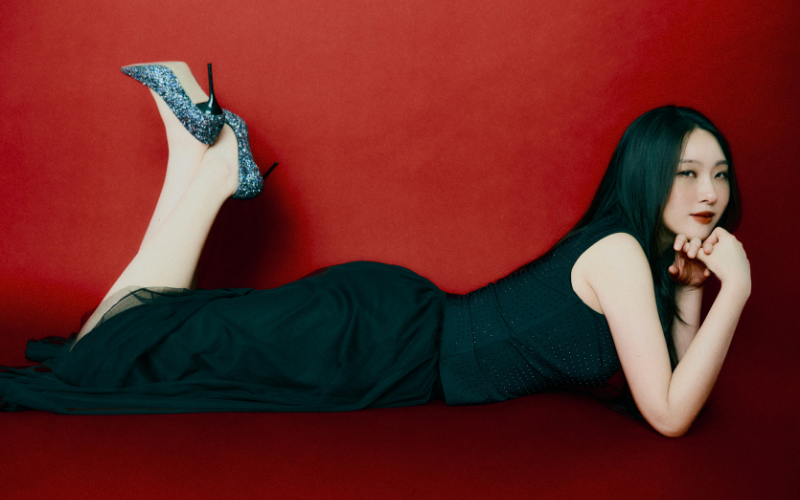
On August 4, during her tour, Maria Kim agreed to a digital interview. As a longtime jazz enthusiast, I couldn't miss this opportunity. I am deeply grateful to her for taking the time, especially when managing back-to-back concerts and travel. The exchange was unscripted—a candid conversation that naturally unfolded her journey. Maria Kim, an artist on the move: between tours, collaborations, and a new album.
Maria began music very early, during a time when jazz was not really present in Korea. She explained to me that she learned mainly by listening to the musicians she admired, trying to understand what they were doing by ear. This way of working stayed with her for years. Later, she had the opportunity to record at Church Studio, a significant place for her, alongside recognized musicians. She speaks of it as a milestone moment, not just for the recording itself, but for what it represented in her journey.
Today, she splits her time between Seoul and New York. She collaborates with various artists and is preparing several projects, including an album releasing on October 23, Something’s Gotta Give. The lead single, Estate, is already available. She is also working on another project scheduled for January with musicians she met recently. In addition, she will participate in an Asian tour with artists from her label.
During the interview, she discussed her current perspective on jazz. She no longer seeks to prove anything. For her, music should create an atmosphere—a shared moment between musicians and the audience. She wants people to listen without asking themselves too many technical questions. To her, jazz remains a simple, accessible language that connects people.
1. When you started studying music, jazz was not yet widely known in Korea. How did you find your own authentic jazz sound?
Maria Kim: “When I started studying music, jazz was not widely known in Korea. I spent years trying to capture an authentic jazz sound, listening carefully to recordings of the musicians I admired and learning from their art. Recording with my jazz heroes at the legendary Church Studio in front of a full house was an overwhelming and unforgettable experience. It was like a dream come true. Something’s Gotta Give will be released on October 23, and the first single Estate is already available. I hope you will listen to it, and I look forward to sharing the full album.”
2. As a Korean artist performing internationally, how does your culture influence your approach to jazz?
Maria Kim: “I started studying music at the age of 3, even before I could speak Korean properly. In a way, music became my first language. Jazz is a universal language. When musicians speak the language of jazz, we can communicate beyond words, cultures, or borders. Rather than highlighting that I am Korean, a woman, a singer, or a pianist, I hope my music reminds people of what we all share. As jazz musicians and human beings living in the same modern world, we feel many of the same emotions. Through my music, I want to express this common humanity and create a connection that goes beyond our differences.”
3. Are there artists you dream of collaborating with, or musical partnerships you wish to explore?
Maria Kim: “I am currently in New York, where I have had the opportunity to meet many incredible musicians and have very enriching conversations with them. During my stay, I recorded several tracks with Canadian singer Caity Gyorgy, New York bassist Ben Wolstein, and drummer Aaron Seeber. I am extremely enthusiastic about this project, which is scheduled for release next January, and I can't wait to share it with everyone.”
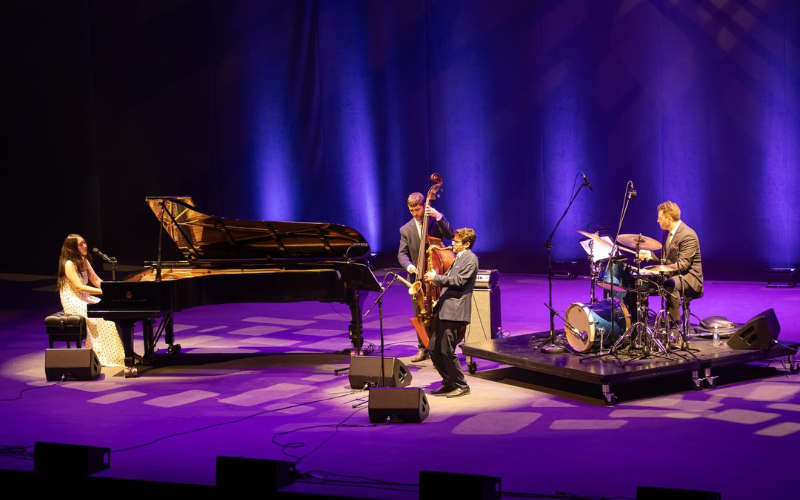
© Maria Kim
4. What is the most essential element in your creative process—emotion, storytelling, technique, or something else?
Maria Kim: “When I was younger, I viewed music as a competition. I thought that if I became a more talented and accomplished musician, I would have more opportunities and more people would like my music. But today, I have realized that music is more of a life journey, a way of sharing experiences and emotions with musicians, the audience, listeners, and everyone involved. In the end, music is created by human beings, and the human connection behind it is what gives it meaning. That’s why I try to build a joyful community with the people I love and work with. I want the audience, looking at us from the outside, to feel that we are truly having a good time together, and to make them want to be part of this shared experience.”
5. What emotions or messages do you hope the audience takes away from your music?
Maria Kim: “Even with the exact same piece of music, different people can feel completely different things. When someone listens to my music, I hope it becomes the soundtrack of their own life, not just something that belongs to me as a creator. There is no right or wrong way to listen to my music or to appreciate jazz. In a way, music is like food: we experience it through our senses. You don't need to study a recipe to enjoy a dish. If you discover a flavor you like, you have every right to say you like it. It’s the same with music. You can listen in silence, sing, dance, applaud, or simply feel through your natural instincts. I believe everyone has their own way of connecting to music.”
6. Do you have upcoming projects or new artistic directions you wish to explore?
Maria Kim: “As I mentioned, my new album Something’s Gotta Give will be released on October 23. I hope you will stay tuned and enjoy the music. During this trip, I had the opportunity to play and collaborate with many wonderful New York musicians. I would love to invite them to Korea in the future so that the Korean public can discover their music and talent. In November, my colleagues from the label La Reserve, Caity Gyorgy and Lucy Yeghiazaryan, will visit Korea and Japan, and we will do a label tour together for a week. I am really excited about this collaboration and the opportunity to share our music with audiences in Asia.”
7. What does jazz represent for you personally—beyond the genre, as a form of expression?
Maria Kim: “I am a very introverted person. If I hadn't pursued a career as a jazz musician, I probably would have lived a much simpler life without meeting as many people. But thanks to jazz, I have had countless experiences with people from different cultures, backgrounds, and perspectives all over the world. They welcome me into their lives, talk with me, spend time with me, share their stories, introduce me to their loved ones, and become a meaningful part of my life. Jazz has expanded my world, and I hope my music can do the same for others by becoming a way to open their hearts, connect with people, and experience life in a more positive and profound way.”