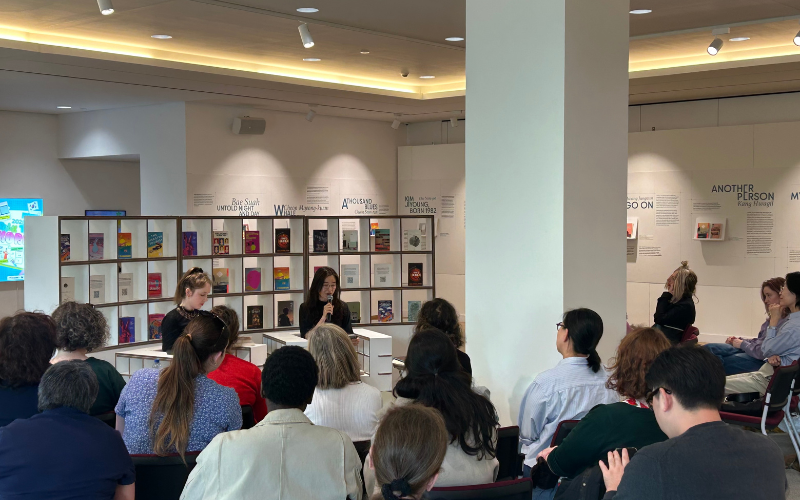
There are exhibitions that touch you differently when you are an author yourself. Entering the Korean Cultural Center in Brussels, I immediately felt that this one would leave a mark: Korean books, their translations, themes addressing distance, exhaustion, care… words that resonated with what I write, what I read, and what I experience.
This exhibition was not merely a literary panorama; it was a way of showcasing how Korean stories travel, how they transition into other languages, and how they connect with new readers. To understand this approach, I exchanged emails on July 23, 2026, with Haetal CHUNG, Project Manager at KCC Brussels, who shared the intentions and choices behind this rich and essential exhibition.
What was the main objective of this exhibition dedicated to Korean literature?
Haetal CHUNG: “The main objective was to introduce European audiences to the richness and diversity of Korean literature published since the 2000s. The Center also wished to highlight the vital role of translation in bridging Korean literature and international readers. By displaying original editions alongside their translated counterparts, the exhibition demonstrates that translation transcends mere linguistic conversion to become a genuine bridge between cultures. In line with this mission, a literary talk with translator Clare Richards offered the public a firsthand perspective on the process of conveying Korean works into other languages and cultures.”
How were the works, authors, and themes selected?
Haetal CHUNG: “The selection was carried out in collaboration with Dr. Eugene Kim, a researcher specializing in transnational literature. The twenty selected works highlight internationally recognized authors, several of whom have been nominated for the International Booker Prize or have won major literary awards. The exhibition is structured around five key concepts: Distance, Exhaustion, Perseverance, Care, and Imagination. These themes allow visitors to explore the emotional and social transformations of contemporary Korea while providing a universal reading experience.”
Which aspects of Korean literature did you particularly want to showcase?
Haetal CHUNG: “The Center wanted to demonstrate that contemporary Korean literature is not confined to a single genre. The showcased works span a wide spectrum: social narratives, family dramas, science fiction, fantasy, and thrillers. Although deeply rooted in Korean reality, these works possess a universal reach capable of moving readers worldwide.”
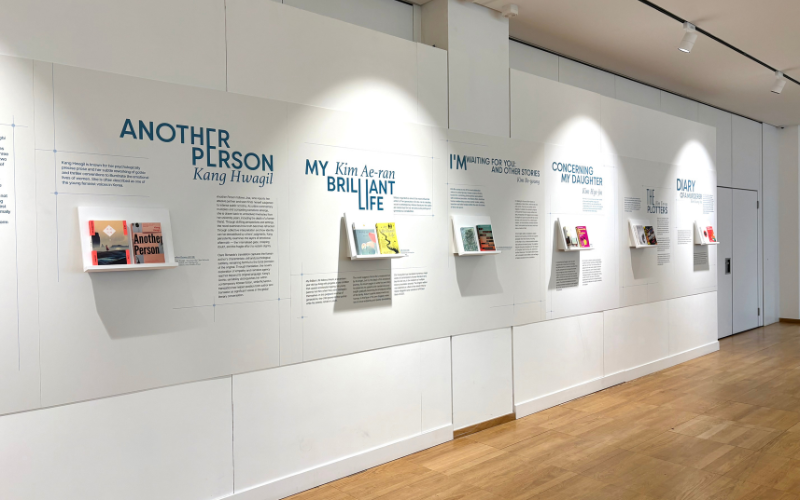
© Korean Cultural Center Brussels
What feedback have you received from visitors?
Haetal CHUNG: “Visitors particularly appreciated the variety of genres and the dedicated reading space created at the heart of the exhibition. Many browsed the books on-site and asked for reading recommendations to better understand Korean society. Certain visitors, especially those traveling to Korea for professional reasons, expressed great interest in books that provide a more nuanced understanding of Korean culture.”
What role does literature play today in spreading Korean culture internationally?
Haetal CHUNG: “Literature offers a unique window into the history, culture, and emotional landscape of a society. It reflects the changes, inquiries, and daily realities of contemporary Korea, while fostering intercultural dialogue through translation. The growing interest in Korean literature signifies a broader shift: Korean culture is no longer limited to K-pop, cuisine, or film and television, but now encompasses the values, lifestyles, and social experiences of Korean people.”
Are you planning to develop other projects around Korean literature?
Haetal CHUNG: “Building on the success of this exhibition, the Center plans to expand its literary programming with author talks, translator meet-and-greets, book clubs, and thematic workshops. Our goal is to strengthen connections between European readers and Korean publishing professionals, and to continue promoting Korean literature internationally.”