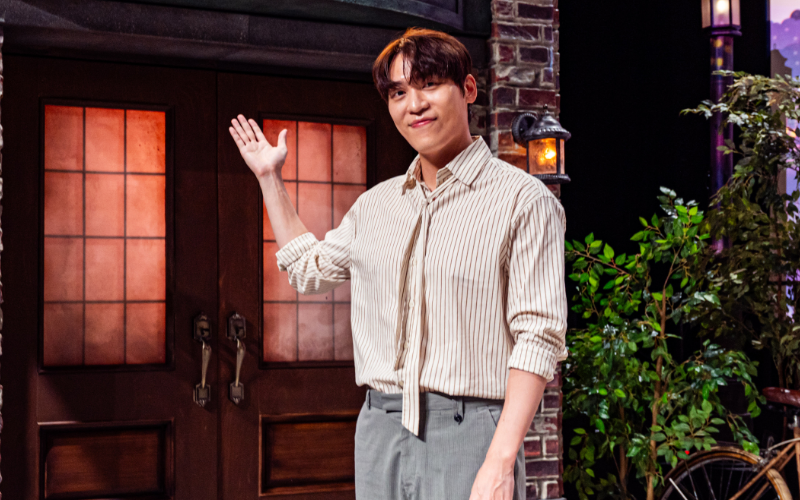
At the K-Music Night organized by the Korean Cultural Center New York (KCCNY), John Park appeared true to himself: simple and unpretentious. Bridging two cultures, the Korean-American artist paves his way at his own pace, driven by a sensitivity shaped both in America and in Korea. On August 19, 2026, he took the time to answer our questions in writing, offering rare insight into his career and vision of the craft.
Right from the opening lines, a key trait stands out: his calm demeanor. John Park never tries to embellish or dramatize his story. He speaks of his evolution as a series of encounters and turns taken over time, far from meticulously mapped-out career plans. From his notable first steps on American Idol to his anchoring in the Korean music scene, he moves forward with quiet lucidity—a healthy detachment reflected instantly in his timbre: deep, warm, and profoundly rooted in truth.
This interview outlines the contours of a musician who prefers nuance over flash. For him, the stage is not a space for technical demonstration, but a place of shared vulnerability. This is undoubtedly why his followers remain so loyal, from Seoul to the United States.
Behind these few answers, John Park reveals himself as an artist in motion, curious to test new horizons internationally, yet rigorously attached to a sober, matured, and resolutely human artistic line.
1. Your music blends Korean and American influences. How has your Korean-American identity shaped your artistic direction?
John Park: I don't consciously try to separate or combine Korean and American influences when making music. Having grown up in the United States and spent many years living and working in Korea, both cultures have naturally become a part of who I am. These experiences inevitably find their way into my music and how I express myself. Performing in front of diverse audiences, such as in New York, also makes me more aware of what it means to be a Korean-American artist.
2. K-Music Night emphasizes storytelling and emotional sincerity. What message did you want to convey through your performance?
John Park: Rather than trying to convey a specific message, I wanted to honestly share the music and emotions that feel authentic to me. I believe that even when language or cultural backgrounds differ, sincere music can create a genuine connection. I also hoped to naturally show that beyond the image of K-pop, Korean music carries many different stories, colors, and voices.
3. From American Idol to the Korean music scene, your journey is unique. How do you perceive this transition today?
John Park: Looking back, I don't think I followed a carefully planned path. I mostly made choices that seemed interesting and meaningful at the moment, and one opportunity led to another. Starting my music in the US and then building a large part of my career in Korea has given me experiences I could never have anticipated. Both environments have become important elements of who I am today as an artist.
4. Many listeners describe your voice as comforting and emotional. How do you approach expressing vulnerability in your music?
John Park: I don't try to exaggerate or decorate emotions more than necessary. I want to understand what the song and lyrics are truly expressing, and convey that as honestly as possible. When I sincerely recognize myself in the story, it naturally comes through in my voice. I also find it important to leave enough space so that listeners can find their own memories and emotions within the song.
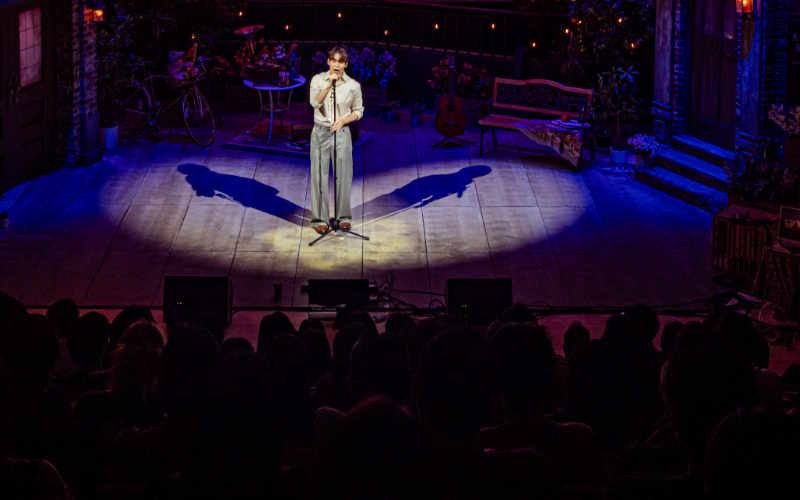
Credits: Taehyun Hwang / KCCNY
5. On the occasion of the US Semiquincentennial (250th anniversary), what role do you think Korean-American artists can play in cultural dialogue?
John Park: When I was growing up in the US, I didn't often see people who looked like me in popular culture. Today, I think Korean-American artists simply contribute by honestly sharing their stories and experiences. We don't need to represent a single identity. By showing the diversity of our journeys, we enrich the broader cultural conversation within American society.
6. What new projects or musical directions would you like to explore soon?
John Park: I would love to release more music in English and gradually expand my live performances abroad. I don't think one needs to start with large venues—I prefer starting where I can genuinely meet the audience and build from there. I hope to play more in the United States, Japan, and other regions, and continue meeting new listeners through live music.