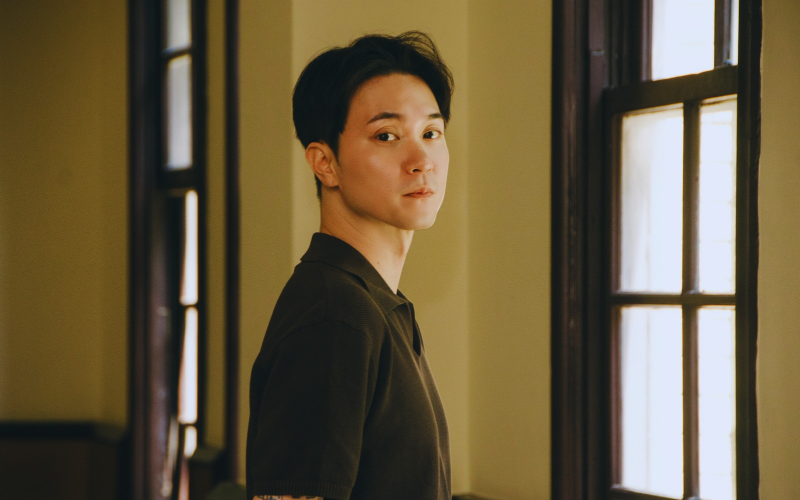
Director Han Chang-rok is drawn to moments and emotions that can be uncomfortable to confront.
Rather than focusing only on dramatic events, he says his work often begins with personal experiences, feelings or people who stay in his mind. From there, those fragments develop through collaboration with actors and crew into stories that extend beyond his own experience.
Han’s debut feature, Chung Chung Chung — released internationally as Funky Freaky Freaks — follows teenagers caught in a cycle of impulse, collision and shock. The film premiered in competition at the 2025 Busan International Film Festival, where it received the Busan Award Special Jury Award. His earlier short film Peeper also screened at several international film festivals.
In an email interview with Korea Global News, Han discussed his developing identity as a director, collaboration in filmmaking, the realities of independent cinema and the films that shaped his own cinematic perspective.
Q. Your films are often described as bold and experimental. How would you define your directorial identity?
A. As a filmmaker who has just released his debut feature, I feel it’s still too early to clearly define my directorial identity. However, looking back at the short films and scripts I’ve worked on, I can see certain recurring elements that reflect my personal taste. I’m naturally drawn to things that feel uncomfortable—situations, events, or characters that most people would prefer to avoid. If given the chance, I want to continue observing these uncomfortable aspects and turning them into films.
Q. You’ve worked in directing, screenwriting, editing, and more. How have these experiences shaped your storytelling?
A. I believe every part of filmmaking is organically connected. This was also true during the making of Chung Chung Chung. Sometimes a directing idea comes first, other times an editing concept appears before anything else. These thoughts naturally lead me to adjust details in the script. The same applies to departments I don’t directly handle, such as cinematography or production design. Using the storyline as a central axis, each department expands new ideas, and I think this process is what gives cinema its vitality.
Q. Your films have been invited to international film festivals. What does this recognition abroad mean to you?
A. Chung Chung Chung deals with a very specific Korean environment and generation. It was fascinating to see audiences from different cultures and languages interpret the film in their own ways. Engaging in conversations with viewers, receiving questions, and exchanging thoughts was also meaningful. Seeing how a story rooted in a specific Korean context connects with audiences from other cultures allowed me to discover another possibility of cinema.
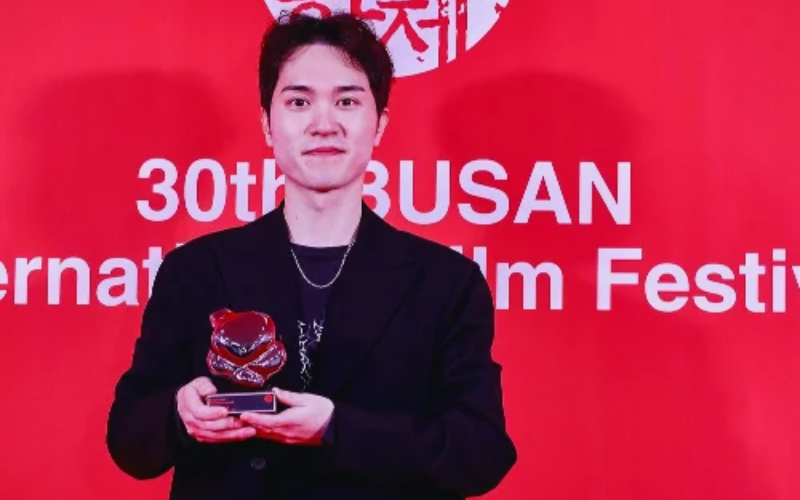
Busan International Film Festival © Busan International Film Festival
Q. Your work captures the emotions and energy of younger generations. Why are you drawn to these themes?
A. In recent years, I’ve been interested in the strange anxiety, desire, and impulses present in Korean society. While Korean pop culture continues to expand globally and people admire its glamorous surface, I felt that somewhere within Korean society, something negative was on the verge of exploding. When people try to look away from it, I feel compelled to look directly at it.
Q. Could you describe your creative process—from the initial idea to the final film?
A. My films often begin with something very personal: an event I experienced, a feeling, or even a specific person. As I expand these ideas, I collaborate with staff members to transform them into something that goes beyond my personal experiences. Even if a project starts from something intimate, I believe it can grow into a story that many people can connect with through the perspectives and ideas of others.
Q. You’ve received several awards at Korean film festivals. Has this influenced your future direction?
A. Receiving awards is certainly an honor, but I don’t want them to dictate the direction of my next work. Instead, I try to stay unaffected by such achievements and focus solely on what I want to continue exploring.
Q. The Korean independent film scene is vibrant but challenging. What is the biggest difficulty you face?
A. One of the biggest challenges is simply maintaining an environment where you can continue making films. In Korea, it’s nearly impossible to sustain a living solely through independent filmmaking. Completing one film is difficult enough, but preparing the next one and enduring the time until you can make another is a major challenge for independent filmmakers.
Q. You’ve also worked as an assistant director. What was the biggest lesson from that experience?
A. Working as an assistant director taught me that filmmaking is never the work of a single person. On set, countless people contribute to creating a single scene. Even with a great idea, you must communicate constantly with actors, cinematographers, production designers, lighting teams, and sound crews to bring it to life. This experience taught me that films are created through the meeting of many minds and skills. I still value listening to others on set and discovering unexpected possibilities through collaboration.
Q. Are there films, directors, or cinematic movements that have influenced you?
A. I was most influenced by early 2000s Korean cinema, often referred to as the “Korean film renaissance.” Films like Park Chan-wook’s Oldboy, Bong Joon-ho’s Memories of Murder, Kim Jee-woon’s A Bittersweet Life, and Jang Joon-hwan’s Save the Green Planet! shaped my cinematic upbringing. These films combined genre entertainment with strong artistic identity, bending traditional film grammar while still connecting with audiences. Growing up with such films made me who I am today.
Q. What can audiences expect from you next?
A. I’m currently preparing a new project. Although I can’t reveal details yet, I’m working toward exploring new characters and new worlds rather than repeating the themes of my previous film. I want to continue being a director who creates new stories.
Han’s answers repeatedly return to observation, collaboration and the desire to continue exploring subjects that make him uncomfortable or curious.
His debut feature has already brought him recognition at several Korean film festivals, including the Busan International Film Festival, Seoul Independent Film Festival and Muju Film Festival, while Peeper has reached audiences at international festivals including Rotterdam and New York.
For Han, however, those achievements do not determine what comes next. As he prepares another project, he says his focus remains on finding new characters, new worlds and stories that allow him to keep observing the parts of society he feels compelled to examine.