In cultural journalism, explaining local traditions to an international audience often requires finding a familiar bridge. As an Honorary Reporter for Korea.net, I regularly encounter readers who view Korean customs as distant, complex, or reserved only for insiders. Yet, as the leaves turn red and gold with the arrival of autumn, a striking parallel emerges between Korean culture and Western traditions: the deep structural and human connection between Chuseok and Thanksgiving. Beyond the specific rituals and culinary specialties unique to each continent, a careful analysis reveals that these two major holidays rest on fundamentally identical principles: gratitude for the harvest, the centrality of family unity, and the preservation of cultural memory.
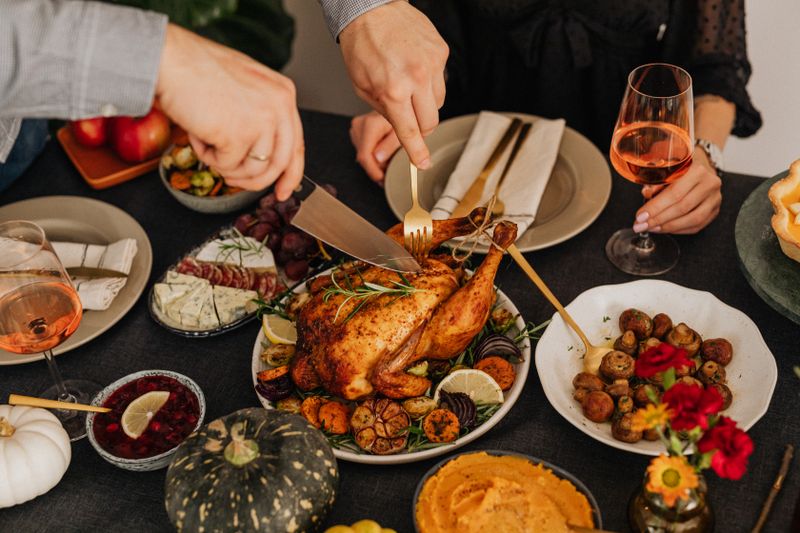
In North America, where I come from, Thanksgiving has served for centuries as a major national anchor. Long before dawn, households transform into true culinary preparation centers where meticulous logistics take over. Generations work side by side in kitchens animated by the slow roasting of turkey, the dressing of stuffing, and the aroma of autumn vegetables, following recipes passed down for decades. In this context, the meal is not merely a delicious break, but a solemn rally point for multigenerational families who sometimes travel thousands of miles to reunite. Once evening falls, the event glides naturally into community life, marked by popular parades and a symbolic transition toward winter.
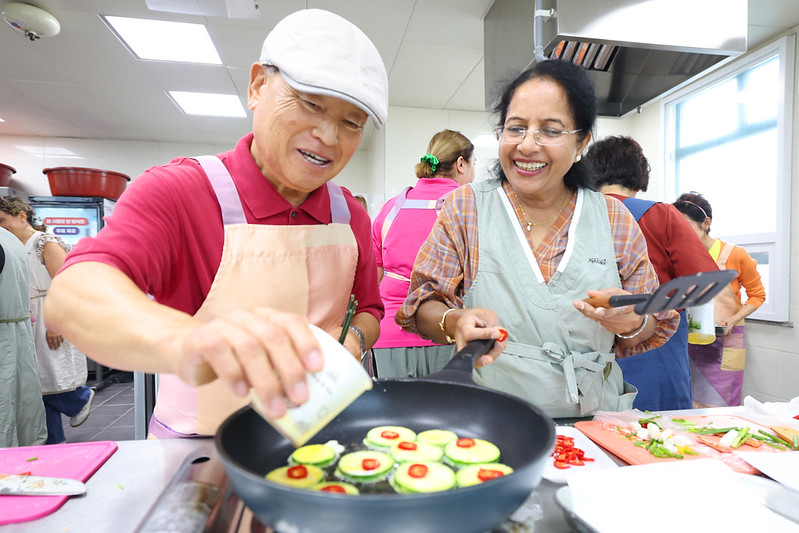
On the other side of the Pacific, Korea experiences a strictly identical societal impulse during Chuseok, also known as Hangawi. The eve of the main day triggers one of the year's largest domestic migrations, transforming the entire nation. Millions of people travel across the peninsula to return to their family roots, clogging highway networks and train lines. Inside homes, the preparation phase follows a collaborative rhythm of great precision. Loved ones gather to handcraft songpyeon—the famous half-moon-shaped rice cakes stuffed with sesame, chestnut, or bean paste—while preparing various jeon and arranging platters of autumn fruits like Korean pears and persimmons. On the morning of Chuseok itself, the mood shifts toward formal reflection and great solemnity. Families set up elaborate altar tables for charye, an ancestral rite codified by centuries of Confucian tradition. Each dish occupies a strictly defined place on the ritualized table, offering sincere thanks to past generations for the season's abundance and the family's protection. This solemnity traditionally extends into the afternoon with seongmyo, the visit and careful tidying of ancestral graves. Through these repeated annual gestures, Korean families reaffirm the indissoluble bond uniting the living with their ancestors.
However, reducing Chuseok to its spiritual dimension alone would ignore its joyful aspect. Once the formal rites are completed, traditional festivities fill public spaces and hearts. Participants test their strength in ssireum (traditional wrestling), compete with family in yutnori (a popular board game played with wooden sticks), or perform ganggangsullae—a famous circle dance traditionally danced by women under the full moon to pray for the village's prosperity. This duality between ancestral duty and popular celebration imparts a unique energy that transcends generations.
Although separated by geography, history, and distinct philosophical backgrounds, Thanksgiving and Chuseok share an identical functional backbone. Both celebrations mark the end of the agricultural cycle by honoring seasonal produce: squash, sweet potatoes, and turkey on one side; fresh rice, grains, and autumn fruits on the other. Whether braving endless traffic jams on American highways or boarding packed KTX trains departing from Seoul Station, the underlying human motivation remains the same. These two events act as a vital pause in the modern calendar, allowing communities to pause, step out of the daily swirl, honor their shared roots, strengthen family ties, and express deep gratitude for the past year. By highlighting these convergences, we realize that beneath the diversity of rituals, the search for gathering and sharing remains a deeply universal need.