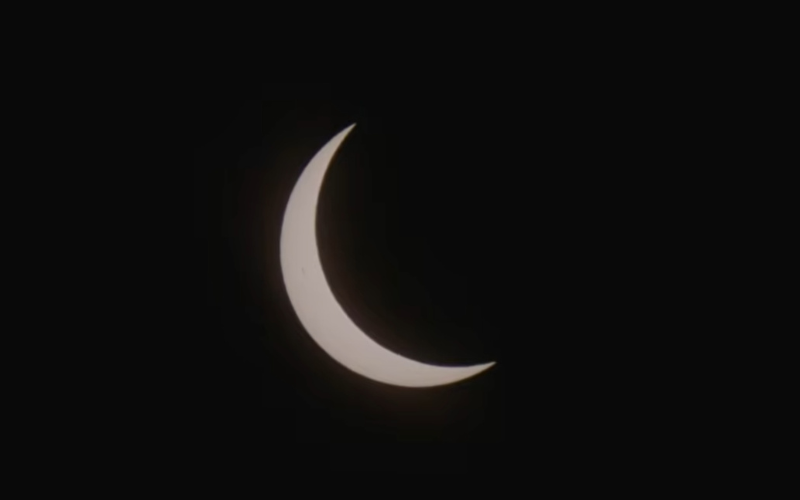
When the Sun Disappears: The Eclipse Through the Eyes of Korea, Past and Present
Like millions of people who witnessed the solar eclipse, August 12 was a phenomenal moment for both young and old. We looked up, we smiled, we filmed, we shared. For us, it was a rare, spectacular moment, but without any real deeper meaning—a bright parenthesis in an ordinary day. But did you know that during the Joseon (조선) period, it was an entirely different story?
Imagine for a moment: Seoul, three hundred years ago. No special glasses, no social media, no scientists to explain the phenomenon. Just a people living to the rhythm of the seasons, harvests, and prayers, and a king whose destiny was supposed to be aligned with the heavens. And suddenly… the light begins to fade.
At first, no one understands. Shadows lengthen, colors distort, and birds fall silent. The sun, this absolute reference point and symbol of stability, is being "eaten" by something invisible. Children hide behind their mothers. Merchants close their stalls. The elderly whisper prayers. The silence becomes heavy, almost sacred.
In the palaces, it is even more intense. The royal astrologers, the Gwansanggam (관상감), have the duty to read the sky like a book. For them, an eclipse is not a natural phenomenon; it is a message—a warning sent to the King. The royal annals, the Joseon Wangjo Sillok (조선왕조실록), describe it with almost frightening precision: every eclipse is recorded, interpreted, and debated. One reads phrases like, "The sun has darkened. The kingdom must purify itself," or "Moral disorder has provoked the anger of the heavens." And then there is the legend: the Cheongu (천구), the celestial dog—a monster from the invisible world attempting to devour the sun or the moon.
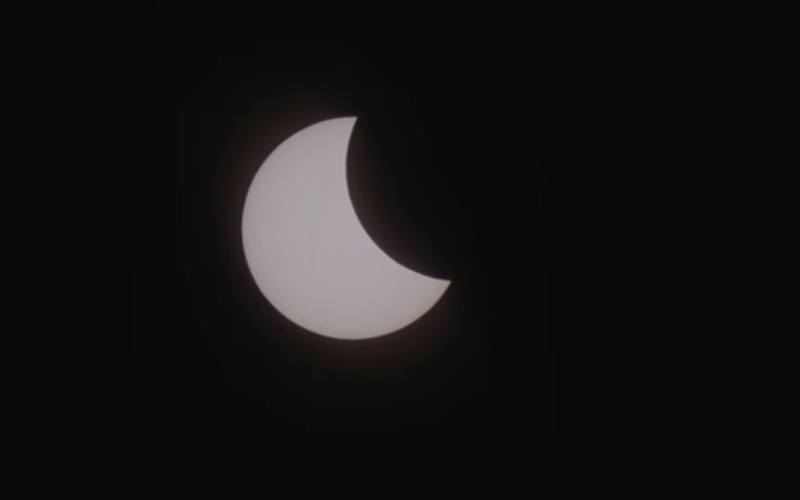
When the eclipse begins, the people do not remain still. They run, beat drums, shake pots, shout, and make as much noise as possible. The sound is meant to frighten the celestial dog, to make it let go, and to save the light. It is a collective ritual, an act of survival, a way of saying: "We will not let the darkness win." In the villages, Buddhist monks recite sutras (수트라). In Confucian temples, incense is burned. In the palaces, the King withdraws to pray, because if the sky darkens, perhaps he is the one at fault. An eclipse could trigger political decisions: reforms, punishments, or the changing of ministers. The heavens had spoken, and the kingdom had to respond.
Then, slowly, the light returns. The sun reappears, as if it had won a silent battle. People breathe. Children laugh again. Merchants reopen their stalls. The King emerges from his prayer hall. The world catches its breath.
Today in Korea, the eclipse no longer holds this sacred dimension. We watch it with curiosity, with wonder, wearing special glasses. But something remains: a strange sensation, a shiver, an awareness that the sky can change, that light can vanish, and that the world can tip, just for a moment. In dramas (드라마), the eclipse often marks a turning point: a destined encounter, a revelation, an internal change. In films (영화), it symbolizes transformation and rebirth. In K-pop (케이팝), it becomes an image of duality—of light and shadow, of what disappears only to return even brighter.
On August 12, we saw a spectacle. Joseon saw a message. Modern Korea sees poetry. And we, somewhere between the three, have simply looked up at the sky, like humans seeking to understand what is beyond us.