
1. Could you introduce yourself and share how your artistic journey began, from traditional filmmaking to AI-driven cinema?
Antonia Kim: My name is Antonia Kim, and I am the founder and director of AITONIA. Before becoming an AI filmmaker, I spent more than fifteen years working as a producer and director at KBS, Korea's national public broadcaster. During that time, I worked across news, documentaries, cultural programs and international co-productions.
Those years taught me how to structure a story, control the emotional rhythm of a scene, and understand how music, editing, camera movement, and human expression must work together. But as time passed, I began to realize that I was happiest when I was creating something entirely new; developing original formats, exploring unfamiliar territory and building a world of my own. I had always dreamed of creating a body of work that people would associate with my name. Then I encountered generative AI.
The moment I saw its potential, I instinctively understood that a new era was beginning: one in which an individual creator could bring even the most cinematic visions to life. I did not see AI as a departure from my previous career. Rather, it felt like an expansion of everything I had already learned. I connected my experience in traditional production with this new technology, and that connection became the beginning of my journey as an AI filmmaker.
Those years taught me how to structure a story, control the emotional rhythm of a scene, and understand how music, editing, camera movement, and human expression must work together. But as time passed, I began to realize that I was happiest when I was creating something entirely new; developing original formats, exploring unfamiliar territory and building a world of my own. I had always dreamed of creating a body of work that people would associate with my name. Then I encountered generative AI.
The moment I saw its potential, I instinctively understood that a new era was beginning: one in which an individual creator could bring even the most cinematic visions to life. I did not see AI as a departure from my previous career. Rather, it felt like an expansion of everything I had already learned. I connected my experience in traditional production with this new technology, and that connection became the beginning of my journey as an AI filmmaker.
2. What inspired the creation of K-Epic Trilogy, and what makes this project the most ambitious work of your career?
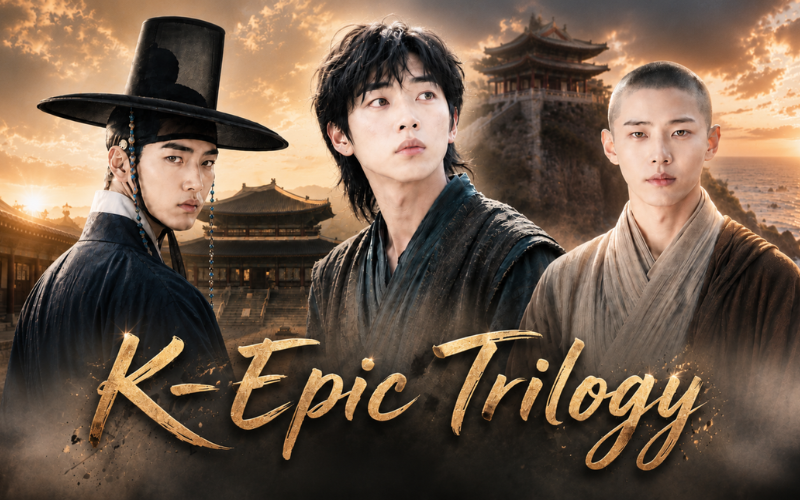
Antonia Kim: K-Epic Trilogy is a Korean historical omnibus feature film that connects three different eras and three distinct stories within a single cinematic universe: The Man Who Protected the King, set during the Joseon Dynasty; Seodong's Song, inspired by a legend from the Baekje Kingdom; and Joshin's Dream, based on a philosophical tale from the Unified Silla period.
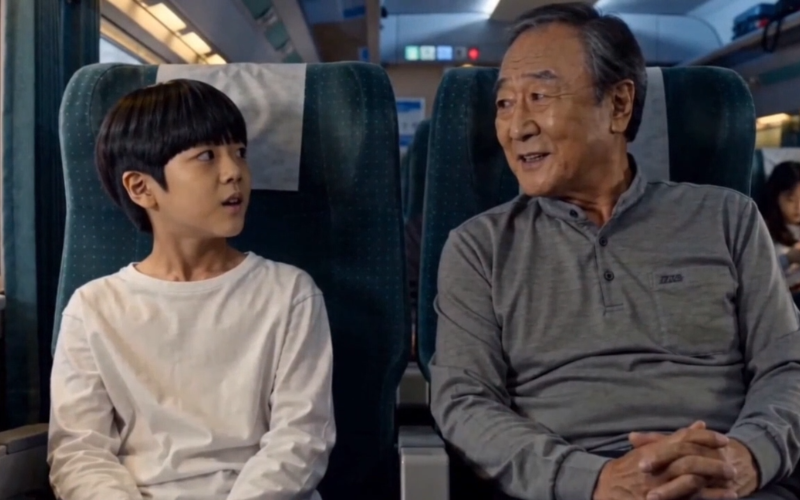
Each story has a different emotional identity. The first is about loyalty and sacrifice, the second is about love, ambition, and winning people's hearts, and the third explores an inner battle involving desire, choice, and spiritual awakening. Although they take place in different periods, I wanted them to feel like parts of one larger human journey. The stories are connected through a grandfather and his young grandson as they travel through Korea. The grandfather represents the wisdom and memory of the older generation, while the grandson represents the future. Through their journey, the past is passed on to the present, and eventually to the next generation.
This is the most ambitious work of my career because I was not simply making three separate historical films. I was creating an entire interconnected universe: writing and directing the stories, designing the characters, composing and shaping the music, editing the films, creating the soundscape, and bringing together three historical periods with one emotional and philosophical vision. It demanded everything I had learned throughout my career, as well as everything I had become as an artist. In many ways, K-Epic Trilogy feels like the culmination of my entire creative journey so far.
Each story has a different emotional identity. The first is about loyalty and sacrifice, the second is about love, ambition, and winning people's hearts, and the third explores an inner battle involving desire, choice, and spiritual awakening. Although they take place in different periods, I wanted them to feel like parts of one larger human journey. The stories are connected through a grandfather and his young grandson as they travel through Korea. The grandfather represents the wisdom and memory of the older generation, while the grandson represents the future. Through their journey, the past is passed on to the present, and eventually to the next generation.
This is the most ambitious work of my career because I was not simply making three separate historical films. I was creating an entire interconnected universe: writing and directing the stories, designing the characters, composing and shaping the music, editing the films, creating the soundscape, and bringing together three historical periods with one emotional and philosophical vision. It demanded everything I had learned throughout my career, as well as everything I had become as an artist. In many ways, K-Epic Trilogy feels like the culmination of my entire creative journey so far.
3. The film has received significant recognition worldwide. What do you think international audiences connect with the most?
Antonia Kim: K-Epic Trilogy has received thirteen awards so far at international film festivals, and what makes this recognition particularly meaningful is that many of these honors have come from traditional international film festivals. This proves that the film has been recognized for its storytelling and emotional impact.
I believe international audiences connect most deeply with the emotions at the heart of the film. They may not know the historical background, understand every cultural reference, or speak Korean, but they recognize universal themes such as love, loyalty, sacrifice, longing, and the pain of letting go. I have received messages from viewers around the world who told me that they cried while listening to the music even before they understood the lyrics. Others said that they felt emotionally attached to the characters and continued thinking about them long after the film ended. Those responses have been profoundly moving to me.
They remind me that emotion has no borders. It is the humanity of the story that creates a lasting connection. Ultimately, audiences do not care only about how a film was made. They care about whether it makes them 'feel something.'
I believe international audiences connect most deeply with the emotions at the heart of the film. They may not know the historical background, understand every cultural reference, or speak Korean, but they recognize universal themes such as love, loyalty, sacrifice, longing, and the pain of letting go. I have received messages from viewers around the world who told me that they cried while listening to the music even before they understood the lyrics. Others said that they felt emotionally attached to the characters and continued thinking about them long after the film ended. Those responses have been profoundly moving to me.
They remind me that emotion has no borders. It is the humanity of the story that creates a lasting connection. Ultimately, audiences do not care only about how a film was made. They care about whether it makes them 'feel something.'
4. Could you explain your concept of artificial respiration and how you breathe emotional life into AI-generated characters?
Antonia Kim: People often associate AI-generated work with something mechanical, artificial, or emotionally hollow. My role as a director is to transform that raw material into something that feels alive. I call this process 'artificial respiration': breathing life and soul into AI-generated characters and stories.
AI can generate an image, a movement, or a voice, but it does not automatically create a living character. Life emerges only when every element is emotionally connected: the character's gaze, the hesitation in a breath, the movement of a hand, the rhythm of the music, the direction of the camera, the timing of a silence and the emotional meaning behind a line of dialogue. I sometimes think of music as the pulse, emotion as the breath, dialogue as the heart, and the camera as the eyes of the film. When all of these elements begin to move together organically, the work develops its own unique DNA.
To create that life, I have to give the film my own emotional energy. I need to understand what each character fears, desires, loves and regrets. I often enter their emotions so deeply that I find it difficult to separate myself from them. That is why completing a film can feel almost like giving birth. I have poured my energy, emotions and a part of my own soul into bringing that world to life. For me, artificial respiration is not a technical technique. It is literally 'connecting through art,' or what I call, 'The Art of Connection.'
AI can generate an image, a movement, or a voice, but it does not automatically create a living character. Life emerges only when every element is emotionally connected: the character's gaze, the hesitation in a breath, the movement of a hand, the rhythm of the music, the direction of the camera, the timing of a silence and the emotional meaning behind a line of dialogue. I sometimes think of music as the pulse, emotion as the breath, dialogue as the heart, and the camera as the eyes of the film. When all of these elements begin to move together organically, the work develops its own unique DNA.
To create that life, I have to give the film my own emotional energy. I need to understand what each character fears, desires, loves and regrets. I often enter their emotions so deeply that I find it difficult to separate myself from them. That is why completing a film can feel almost like giving birth. I have poured my energy, emotions and a part of my own soul into bringing that world to life. For me, artificial respiration is not a technical technique. It is literally 'connecting through art,' or what I call, 'The Art of Connection.'
Credits: Antonia Kim / AITONIA Production
5. How do you balance advanced technology with human storytelling in your creative process?
Antonia Kim: When it comes to the screenplay, I never rely on AI. I write it entirely myself. Only afterward do I use AI to breathe life into it. This is because the story must come from the emotions that exist within me. I first establish my own worldview through a screenplay filled with the emotions, dialogue and directorial vision that I genuinely feel as a human being. Only then do I apply advanced technology to bring that vision to life.
I believe AI does not give an artist a unique voice. Instead, it amplifies the voice and identity that already exist within the artist. The clearer I am about my own emotions, values, and worldview, the more effectively I can use the technology. That is how I maintain the balance: technology expands the range of what I can create, but human intention determines why it should be created.
I believe AI does not give an artist a unique voice. Instead, it amplifies the voice and identity that already exist within the artist. The clearer I am about my own emotions, values, and worldview, the more effectively I can use the technology. That is how I maintain the balance: technology expands the range of what I can create, but human intention determines why it should be created.
6. What were the biggest artistic or technical challenges you faced while creating K-Epic Trilogy?
Antonia Kim: AI can generate beautiful individual images but a film cannot survive on beautiful images alone. Characters must remain emotionally consistent, scenes must flow naturally, and every visual and musical choice must belong to the same world. The third story, Joshin's Dream, was particularly challenging because it follows decades of one man's life. I wanted the audience to feel that they had lived those years alongside him. That required a deliberately slower rhythm and close attention to subtle details: a trembling hand, a broken breath, a change in one's eyes, or a silence that lasts slightly longer than expected.
The most difficult part, however, was emotional rather than technical. While creating the film, I had to experience the characters' suffering as if it were my own. I cried constantly while working on Joshin's Dream. Some days, I had to close my laptop and tell myself, 'This is enough sadness for today.' I learned that even grief has a daily limit, so I had to carry it in installments. Technically, the project also demanded enormous patience. Maintaining character consistency, creating convincing historical environments, controlling camera movement, integrating real Korean landscapes and cultural heritage, and unifying the sound, music, editing, and performances required endless experimentation. The challenge was never simply to make AI produce something impressive. It was to make every element feel as though it belonged to one living, breathing film.
The most difficult part, however, was emotional rather than technical. While creating the film, I had to experience the characters' suffering as if it were my own. I cried constantly while working on Joshin's Dream. Some days, I had to close my laptop and tell myself, 'This is enough sadness for today.' I learned that even grief has a daily limit, so I had to carry it in installments. Technically, the project also demanded enormous patience. Maintaining character consistency, creating convincing historical environments, controlling camera movement, integrating real Korean landscapes and cultural heritage, and unifying the sound, music, editing, and performances required endless experimentation. The challenge was never simply to make AI produce something impressive. It was to make every element feel as though it belonged to one living, breathing film.
7. How do you define the Art of Connection, and how does this philosophy shape your approach to directing and narrative design?
Antonia Kim: The Art of Connection is both my creative philosophy and the way I understand my life. I spent seventeen years living abroad, experiencing Eastern and Western cultures and moving between Korean and English. Later, I connected broadcasting with technology, and now I am connecting AI with human emotion. Looking back, my entire life has been a process of connecting worlds that might initially appear separate.
In filmmaking, I believe nothing should exist in isolation. Music, dialogue, emotion, camera movement, sound, landscape, symbolism and character must function like the organs of one body. Blood flows, the heart beats, and breath continues because everything is organically connected. A film should feel the same way. The philosophy also shapes the narrative structure of K-Epic Trilogy. Three different periods of Korean history are connected through universal human emotions. The past is connected to the present through the grandfather and grandson, while real historical locations are connected to memories, songs and stories.
The Art of Connection also defines the relationship between the filmmaker and the audience. I do not believe that a director should dictate one fixed interpretation. A film becomes complete when viewers connect it with their own memories, emotions and life experiences. For me, creation is the act of discovering relationships between scattered elements and giving them a shared meaning. Even in the age of AI, the human being must remain the one who chooses, evaluates and connects.
In filmmaking, I believe nothing should exist in isolation. Music, dialogue, emotion, camera movement, sound, landscape, symbolism and character must function like the organs of one body. Blood flows, the heart beats, and breath continues because everything is organically connected. A film should feel the same way. The philosophy also shapes the narrative structure of K-Epic Trilogy. Three different periods of Korean history are connected through universal human emotions. The past is connected to the present through the grandfather and grandson, while real historical locations are connected to memories, songs and stories.
The Art of Connection also defines the relationship between the filmmaker and the audience. I do not believe that a director should dictate one fixed interpretation. A film becomes complete when viewers connect it with their own memories, emotions and life experiences. For me, creation is the act of discovering relationships between scattered elements and giving them a shared meaning. Even in the age of AI, the human being must remain the one who chooses, evaluates and connects.
8. In your view, what role will AI play in the future of filmmaking, both in Korea and globally?
Antonia Kim: AI will allow more personal stories to emerge, particularly from creators and cultures that may not previously have had access to large-scale production resources. However, as access to technology becomes more equal, the creator's inner world will become even more important. Soon, almost anyone will be able to generate a beautiful image. The real questions will be: Why this image? Why this music? Why this movement? Why does this story need to be told?
The future will not belong simply to those who use the most advanced tools. It will belong to creators who know themselves, possess a distinctive worldview, and understand how to transform technology into a meaningful human experience.
The future will not belong simply to those who use the most advanced tools. It will belong to creators who know themselves, possess a distinctive worldview, and understand how to transform technology into a meaningful human experience.
9. Are there new artistic directions, technologies, or future projects you are excited to explore after K-Epic Trilogy?
Antonia Kim: K-Epic Trilogy has shown me that a single creator can build an expansive cinematic universe and form genuine emotional connections with audiences around the world. After this project, I want to continue expanding the possibilities of that kind of filmmaking. I am interested in exploring many different genres, including romance, horror, fantasy, animation, comedy, and more experimental forms of cinema. I do not want to be defined by one genre or even by the label of 'AI filmmaker.' What matters to me is whether a story can move someone's heart and remain alive within them.
I also plan to continue creating content that introduces Korea to the world and elevates its presence on the global stage. Through the Art of Connection, I hope to continue taking the Korean Wave beyond borders through AI, just as I am doing now. My goal is not to chase every new tool. It is to discover how new technology can deepen emotion, expand storytelling, and create a more intimate relationship between a film and its audience. I would also like to bring K-Epic Trilogy to a much wider global audience through international streaming platforms. The responses I have already received from viewers across different countries have given me even greater confidence that deeply Korean stories can also become universal stories.
I also plan to continue creating content that introduces Korea to the world and elevates its presence on the global stage. Through the Art of Connection, I hope to continue taking the Korean Wave beyond borders through AI, just as I am doing now. My goal is not to chase every new tool. It is to discover how new technology can deepen emotion, expand storytelling, and create a more intimate relationship between a film and its audience. I would also like to bring K-Epic Trilogy to a much wider global audience through international streaming platforms. The responses I have already received from viewers across different countries have given me even greater confidence that deeply Korean stories can also become universal stories.
10. Do you have a message you would like to share with Korea.net readers and international audiences discovering your work?
Antonia Kim: Thank you for opening your hearts to my work. Although my films are created with AI, they are born from profoundly human emotions. Every character carries a part of me, and every scene contains my memories, questions, pain, love, and hope. These films are not merely things I have created. To me, they are living beings born from my soul. When you watch K-Epic Trilogy, I hope you will not experience it only with your eyes. I hope you will listen to its breath, feel its heartbeat, and allow its characters to enter your heart.
The film comes from Korean history and folklore, but its deepest questions belong to all of us: What do we love? What are we willing to sacrifice? Which choices will we regret, and how can we live without leaving our hearts full of 'what ifs'? One line from Joshin's Dream expresses a belief that has become very personal to me: 'Regret is what remains when we do nothing.' I hope we can all find the courage to follow what moves us, to make the choices that feel true to our souls, and to connect our own stories with the wider world.
Thank you for becoming part of that connection. More information on https://www.instagram.com/pigliet/
The film comes from Korean history and folklore, but its deepest questions belong to all of us: What do we love? What are we willing to sacrifice? Which choices will we regret, and how can we live without leaving our hearts full of 'what ifs'? One line from Joshin's Dream expresses a belief that has become very personal to me: 'Regret is what remains when we do nothing.' I hope we can all find the courage to follow what moves us, to make the choices that feel true to our souls, and to connect our own stories with the wider world.
Thank you for becoming part of that connection. More information on https://www.instagram.com/pigliet/