
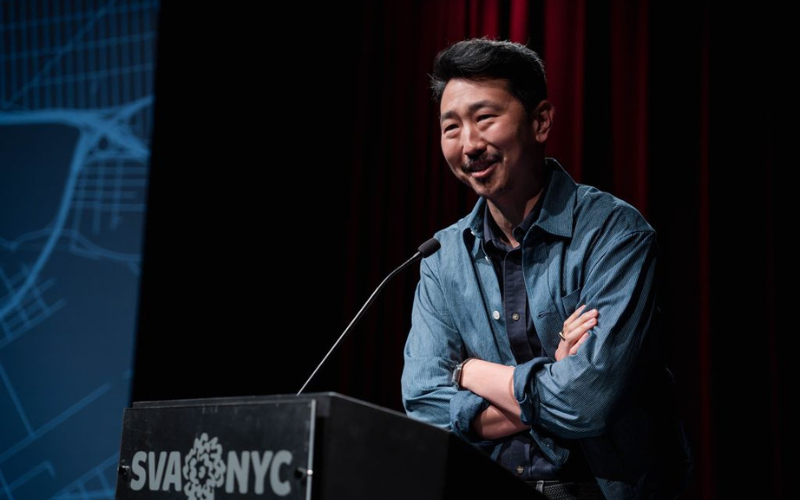
Speaking with Andrew Ahn was an unexpectedly intimate experience. Despite his international success, he approaches filmmaking with humility and a deep sense of purpose. During our video interview, he reflected on the insights that guide his work, the complexity of Korean‑American identity, and the quiet emotional spaces he seeks to illuminate through cinema. His words reveal a filmmaker who is not only shaping narratives but also contributing to cultural change. This interview offers a closer look at the ideas, memories, and convictions that drive his storytelling.
What inspires you the most when you create a film?
Andrew Ahn: “I always begin with an insight — an observation that becomes the soul of the film. For The Wedding Banquet, it was the idea that building a family can be very difficult for queer people. For Spa Night, my insight was about reconciling queer identity with Korean‑American identity. I realized that both identities coexist inside Korean spas, where gay men were hooking up — somehow it was gay and Korean at the same time, and I wanted to understand how that could be. These insights fuel my creative process. Without them, a film becomes hollow — just plot or location without a brain or a heart. Insight is what inspires the formation of a movie.”
Your films often feel very personal. How do your own experiences shape your stories?
Andrew Ahn: “Experience grounds my films. Filmmaking is make‑believe — you can go in any direction. In Spa Night, technically an elephant could walk into the steam room because it’s a movie. Because there are endless possibilities, I rely on my memories and experiences to guide me. They help me find a clear path while writing and directing.”
Fire Island was a major moment for Asian and queer representation. What did you want people to feel when watching it?
Andrew Ahn: “I received the script during the pandemic, and what struck me was how much it celebrated friendship. At that time, we were quarantined, unable to see people, party, or drink together. This film reminded me how important friendships are, and I wanted the audience to feel that celebration — that friendships are special and worth cherishing.”
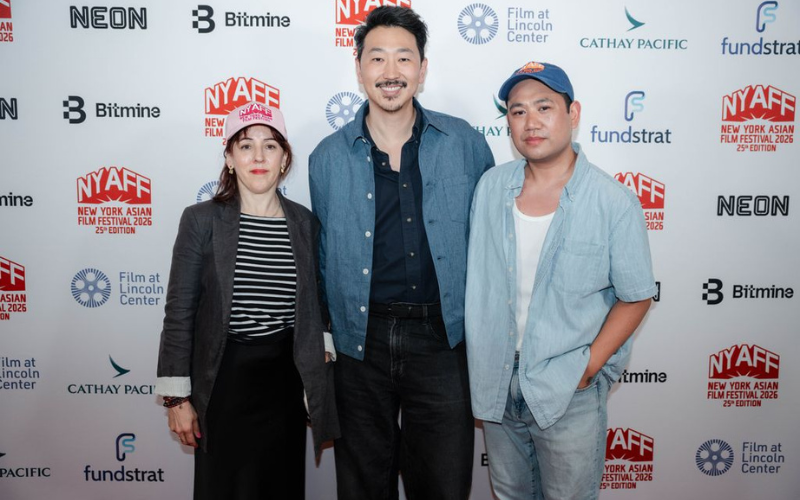
© Elena Dagan / NYAFF Festival
Spa Night and Driveways have a quiet, intimate style. Why do you like this type of storytelling?
Andrew Ahn: “I’m drawn to stories that are overlooked — things people don’t immediately notice. Filmmaking feels like being out in the world, seeing something interesting, and telling your friend, ‘Hey, look over there.’ With Spa Night and Driveways, I wanted to highlight moments that are quiet or beneath the surface, things people might miss in daily life. Even in bigger, more energetic films like Fire Island or The Wedding Banquet, I still look for those private, intimate moments. They feel special because they’re so personal.”
As a Korean‑American filmmaker, how does your identity influence your work?
Andrew Ahn: “My identity helps me understand my place in the world and the perspective I can share. Being Korean‑American — not fully Korean — gives me layers and complexity that I enjoy exploring. I’m inspired by Korean filmmakers like Lee Chang‑dong, Bong Joon‑ho, and Park Chan‑wook. Even today at the festival, I watched the Korean film 3670. Korean cinema keeps me connected to a homeland that inspires me deeply.”
What challenges do Asian or queer filmmakers still face in the industry today?
Andrew Ahn: “In the U.S., film financing is driven by ‘star power’ — famous actors who attract money. It’s difficult for Asian and Asian‑American actors to reach that market status. This system is very capitalistic, and it often undervalues the talent and creativity of Asian and Asian‑American artists. My hope is that, slowly, we can prove to the industry that films have worth beyond how much money they make.”
How do you see the future of Korean and Korean‑American cinema in global festivals?
Andrew Ahn: “There’s a lot of interest in Korean and Korean‑American stories. At TIFF, they even held a panel on Korean diaspora narratives. Busan International Film Festival is an incredible global gathering point — I was there last year with The Wedding Banquet. There is excitement, and the key is supporting future generations of filmmakers. I’m honestly excited to grow old and watch younger filmmakers make amazing movies and push me aside.”
Spa Night celebrates its 10th anniversary. How do you feel?
Andrew Ahn: “I’m proud that people still watch the film. It makes me laugh when someone says they haven’t seen it yet — you’ve had ten years! I’m happy people continue to discover it, and it’s exciting to see it alongside my other work. I hope that one day the film feels outdated — meaning there’s no longer anxiety about being gay and Korean‑American, and those identities can coexist naturally. Part of why I’m committed to making films about queer and Asian people is because the only way to change culture is to create culture. Just like the Korean spa is both Korean and gay at the same time, my films are gay and Korean at the same time — and I hope they inspire more people.”
What advice would you give young filmmakers who want to tell personal stories?
Andrew Ahn: “Find a community that supports you, challenges you, and collaborates with you. Film is a deeply collaborative medium. People often focus on the writer‑director, the ‘auteur,’ but you need cinematographers, production designers, costume designers, producers — people you love working with both artistically and socially. That community is essential to creating meaningful work.”
Can you share anything about your next projects or themes you want to explore?
Andrew Ahn: “I want to keep making gay and Asian stories, but explore different sides of them. I’m interested in love stories, in music and how it shapes my life with friends, and in aging as a queer person — thinking about legacy. Each of my films explores a different facet of the queer Asian‑American experience. I hope that, over time, they form a beautiful jewel of a body of work.”