On July 31, 2026, an exclusive digital interview was granted by Anderson J. Kim, a personality widely recognized for his humanitarian commitment and international public service actions. Usually associated with diplomatic and humanitarian missions, he rarely appears in a setting dedicated to his literary work. This encounter thus offered a unique opportunity to discover a more personal side of his path.
Far from institutional protocols, Mr. Kim presented the publication of his second book, a volume that follows the continuity of his Memories. This new book does not seek to comment on current international affairs or tackle political issues. Instead, it explores lived experiences, intimate reflections, and values that have shaped his journey.
The author reveals pivotal, at times painful moments that he chose to transform into literary substance. His approach remains deliberately measured: to transmit, to illuminate, and to offer an honest look at periods that influenced his vision of life. This provided deep insight into the importance he places on this project, designed as a testament for those seeking to move forward despite hardships.
Q1. Your second volume begins at the moment when everything you had built disappears. How did you find the strength to write about such a painful period?
Anderson J. Kim: “There are moments when everything you have built seems to disappear overnight. For me, that moment began behind the heavy door of a cell. I lost my freedom, my public responsibilities, and the life I knew. Yet, prison was not the end of my story: it became the place where I discovered who I truly was. I didn’t enter prison to write a book. The silence forced me to confront myself. For a long time, I asked myself: ‘Why did this happen to me?’ and then I understood that the real question was: ‘What kind of person am I going to choose to become because of this?’ Writing became a silent conversation with myself. It allowed me to look at pain honestly and preserve values that prison could not take away from me: faith, hope, gratitude, and dignity. I often returned to the mountains of my childhood, to my mother’s sacrifices, and to the lessons she had passed on to me. For me, prison is only the setting, not the story. The story is one of the silent resilience of the human spirit.”
Q2. Among the losses you evoke, which one marked you the most and how did you cope?
Anderson J. Kim: “One imagines that the greatest loss in prison is freedom. For me, that was not the case. The deepest pain was being separated from the people I loved. Freedom can be regained, but lost moments with one’s family never return. I wondered how my family was doing, if they were healthy, if they were carrying burdens I could no longer share. As a husband, father, and son, it was difficult to accept that I could no longer fulfill my daily responsibilities. Yet, suffering reveals what truly matters. Even when separated by walls, the bonds built on trust and sacrifice remain strong. These relationships became my greatest strength. Prison taught me to appreciate simple things: a shared meal, an unhurried conversation, a laugh, the presence of loved ones. It taught me that success is not measured by titles or accomplishments, but by the people who stay by your side when everything else disappears.”
Q3. Was there a specific moment when you understood that dignity and hope could not be taken away from you?
Anderson J. Kim: “The truth came quietly, in the ordinary routine of prison. Every day resembled the next, and at first, I thought those walls defined the boundaries of my life. Then I realized that, even if my physical freedom had been taken, I retained the freedom to choose my response. I could choose bitterness or hope. That choice belonged to me alone. One evening, sitting alone in the silence, I understood that human dignity is neither granted by society nor created by status. It is something we carry within us. No judgment, no locked door could take it away from me. From that moment, I began asking myself how to make every day meaningful. Hope is not an emotion that appears when circumstances improve; it is a decision repeated day after day. Prison became the place where I experienced an essential freedom: the freedom to decide what kind of person I wanted to become.”
Q4. Among the letters, reflections, and moments of grace, which was the most difficult to revisit emotionally?
Anderson J. Kim: “Without hesitation: the letters. Memories soften with time, but letters preserve emotions as they were. Re-reading them meant reliving the silence of my cell, the uncertainty of tomorrow, and the longing to see my family in person. Sometimes, I had to stop writing, not to hide the truth, but to honor it. Pain deserves honesty, but also dignity. Writing reminded me that hardship does not affect just one person. Families, friends, and colleagues also carry a share of the burden. This realization reinforced my gratitude toward those who remained by my side. Today, I re-read those letters with compassion for the man who wrote them. He was searching for hope. The man who completed this book had found it.”
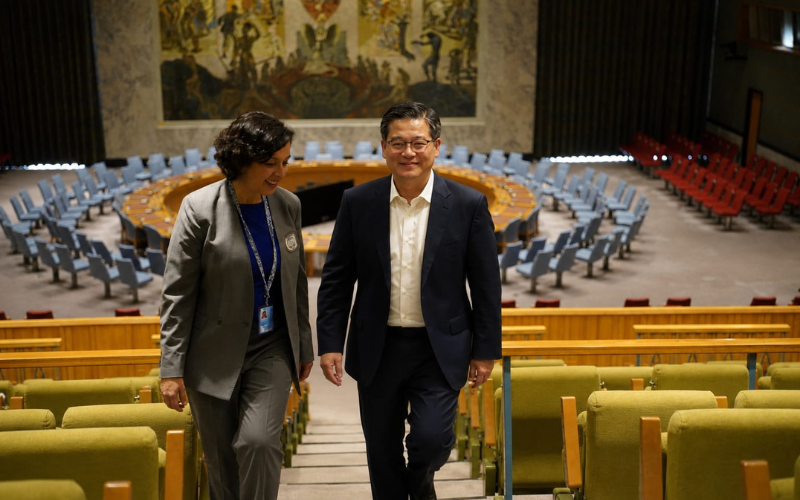
© Anderson J. Kim
Q5. How has your understanding of forgiveness and compassion evolved?
Anderson J. Kim: “Before prison, I thought forgiveness was a decision. Prison taught me that it is a journey. Anger would arise, resentment would knock, solitude invited bitterness. The question was not whether these emotions would appear, but whether I would let them settle. Hatred imprisons the heart long before prison imprisons the body. If I let bitterness define my life, I would remain a prisoner even after my release. Forgiveness does not mean pretending that painful events never happened. It means refusing to surrender one's inner freedom to resentment. In prison, I met people whose stories I could not see at first glance. Some carried regrets; others simply wanted to be recognized as human beings. It taught me to judge less and listen more. Sometimes, we forgive not because the other person deserves it, but because our own heart deserves peace.”
6. How did this period transform your sense of purpose and identity?
Anderson J. Kim: “I chose the subtitle The Journey Never Ends because this book is not about an ending, but about a beginning. Life is not a destination, but a constant journey. Before prison, my identity was tied to my roles and responsibilities. When all of that disappeared, I had to answer a universal question: Who am I when everything I built is no longer there? I discovered that identity cannot rest on titles or achievements. Character, faith, and hope are treasures that no circumstance can confiscate. Prison did not redefine my purpose; it purified it. Instead of asking ‘What can I accomplish?’, I began asking: ‘How can my life encourage someone?’ Success is not measured by the height you reach, but by the depth with which you touch others.”
Q7. What message do you wish readers to take away?
Anderson J. Kim: “Your circumstances do not have the final word. Life surprises us, sometimes with joy, sometimes with pain. None of us choose every chapter of our lives. But life is defined by how we write the chapters that follow. True strength is often silent: the courage to start over, the choice of kindness over bitterness, fidelity to one’s values when no one is watching. Hope often arrives through ordinary acts of compassion. If readers pursue their own journey with courage, compassion, and renewed hope, then my story has found its purpose.”
Q8. Does Volume II close this chapter of your life?
Anderson J. Kim: “In a way, Volume II closes an important chapter. It allowed me to revisit painful memories and place them where they belong. But meaningful journeys never truly end. I don't know if there will be another book. I never wrote to become an author, but because certain experiences carried lessons that should not fade away. Books are not monuments; they are conversations with people we may never meet. Every day offers a blank page. Every act of kindness becomes a paragraph. As long as a heart seeks hope, my journey is not over.”