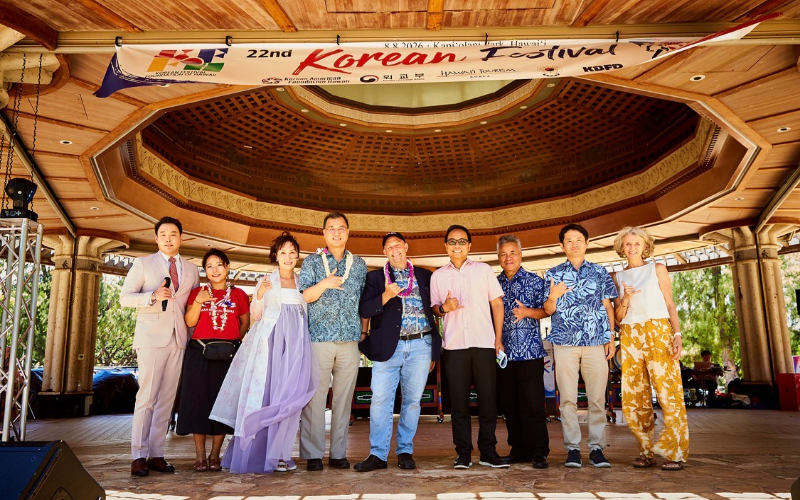
The Korean Festival Hawaii is one of those events that doesn’t need to force anything — it simply happens, and people show up because they know it will feel good. After the 22nd edition wrapped up, what stayed in mind wasn’t just the program or the schedule, but the atmosphere: families walking together between food stands, kids stopping to watch a taekwondo demo, and older members of the community quietly enjoying traditional performances they’ve known all their lives.
This year’s festival didn’t try to reinvent itself. Instead, it focused on what has always made it meaningful: bringing Korean culture into a space where Hawaii’s different communities can meet naturally. You could see the mix everywhere — in the audience, in the volunteers, in the way people reacted to both traditional music and K‑Pop. Nothing felt staged; it felt lived.
Hawaii’s long connection with Korea was present throughout the day, not through big speeches, but through small moments — conversations, shared memories, and the simple fact that Korean culture has been part of the islands for more than a century. The festival reminded everyone of that history while giving younger generations something new to enjoy.
The following interview, conducted in written form on September 3, 2026, looks back at the key moments of this edition and explores why the Korean Festival Hawaii continues to matter to so many people.
1. How would you describe this 22nd edition of the Korean Festival Hawaii now that it has concluded?
Organizer: "The 22nd Korean Festival Hawaii was a meaningful and successful celebration that brought together Hawaii's diverse communities through Korean culture, food, music, and performances. The festival once again demonstrated how culture can connect people across generations and backgrounds."
2. What were your main goals for this year's festival, and do you feel they were achieved?
Organizer: "Our main goal was to introduce both traditional and contemporary Korean culture to the broader Hawaii community while strengthening the connection between the Korean community and local residents. We also wanted younger generations to experience Korean culture and feel proud of their heritage. Based on the strong participation and positive response from attendees, I believe we successfully achieved these goals."
3. What were the most memorable moments of this edition?
Organizer: "One of the most memorable moments was seeing community leaders, performers, and guests come together for the opening ceremony. It was also very moving to watch audiences of all ages enjoy everything from traditional Korean performances to K-Pop. The excitement continued through the final live performances and K-Pop dance party."
4. How did the Hawaiian public respond to the festival? Were there any reactions or comments that particularly touched you?
Organizer: "The festival welcomed people of many different ethnicities, cultures, and age groups. Many attendees told us that they enjoyed experiencing Korean food, traditional performances, and contemporary music in one place. I was especially touched when families said they appreciated having an opportunity for their children to experience and learn about Korean culture firsthand."
5. Which artists or performers contributed most to the energy and success of the festival?
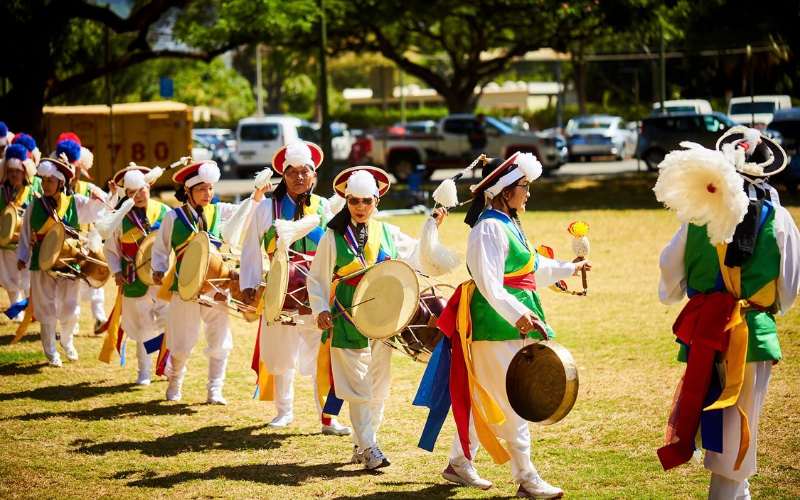
Organizer: "Every performer contributed to the festival's success. Our special guest artists from Korea—including Park Jung Sik, Lee Jung Ok, Seul Gi Kim, and Kang Woo In—brought great energy to the stage. Local saxophone and vocal performers, hula groups, Korean dance studios, taekwondo demonstration teams, traditional percussion groups, and K-Pop dance teams also made the program vibrant and diverse."
6. What role does the festival play in preserving and sharing Korean culture within the local Hawaiian community?
Organizer: "Korea and Hawaii have shared a deep historical connection since the arrival of the first Korean immigrants in Hawaii in 1903. The Korean Festival helps preserve and pass down the history and traditions of Korean immigrants while introducing today's Korean food, music, dance, fashion, and arts to the wider Hawaii community. It serves as an important cultural bridge between Korea and Hawaii."
7. What were the biggest challenges your team faced during the preparation or the event itself?
Organizer: "Organizing a large outdoor festival with limited funding and personnel was one of our biggest challenges. We had to coordinate the stage, performers, vendors, transportation, safety, volunteers, and many other details. We also worked across different time zones to coordinate artists in Korea and Hawaii. These challenges were overcome through the dedication of our organizing committee, volunteers, sponsors, performers, and community partners."
Credits: © Korean Festival Hawaii
8. Were there any new programs or activities introduced this year? How were they received?
Organizer: "This year's program included interactive eating contests featuring jajangmyeon, kimchi, and bungeoppang. We also presented traditional Korean performances, a K-Pop singing and dance contest, a hanbok fashion show, and live music performances. The interactive programs received an especially enthusiastic response from the audience."
9. In your opinion, what cultural impact does the festival have on how Korean culture is perceived in Hawaii?
Organizer: "The festival shows that Korean culture extends beyond K-Pop and Korean food. It has a rich history, deep traditions, and a strong sense of community. By bringing Korean culture into Hawaii's multicultural environment, the festival promotes greater understanding, appreciation, and respect among different communities."
10. What message would you like to share with Korea.net readers and those discovering the Korean Festival Hawaii for the first time?
Organizer: "The Korean Festival Hawaii is more than an annual celebration. It is a cultural gathering that connects Korea and Hawaii, as well as different generations and communities. Everyone is welcome, whether they have Korean heritage or are simply interested in Korean culture. We invite Korea.net readers to visit Hawaii and experience Korean food, music, traditions, and warm hospitality at a future Korean Festival Hawaii. I also extend my sincere appreciation to every performer, sponsor, volunteer, and guest who helped make this year's festival possible."