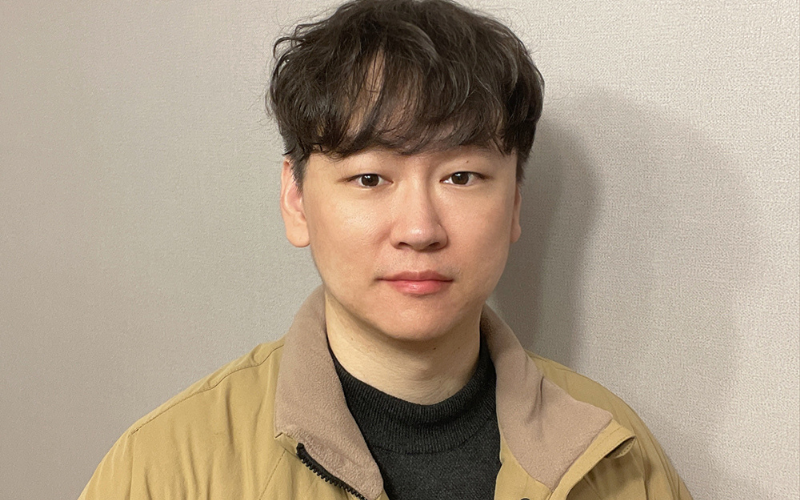
Right from the start, Joo Dong-geun gives the impression of an author who doesn't cheat. A creator who doesn't hide behind formulas or postures, but moves forward with rare sincerity. His words are never forced or calculated; they come with a quiet, almost gentle clarity that contrasts with the intense universes he has built for years. This interview reveals a deeply human, attentive, and surprisingly lucid artist.
Joo Dong-geun doesn't dramatize or mythologize his process. He recounts his works like a life story: with hesitations, certainties, memories, and intuitions. Behind his tales of zombies, Jiangshis, or extraterrestrial cults lies a mind observing the world with childlike curiosity and mature awareness.
Conducted in writing on September 3, 2026, this interview highlights an artistic approach that refuses easy effects, favoring total fidelity to who he truly is.
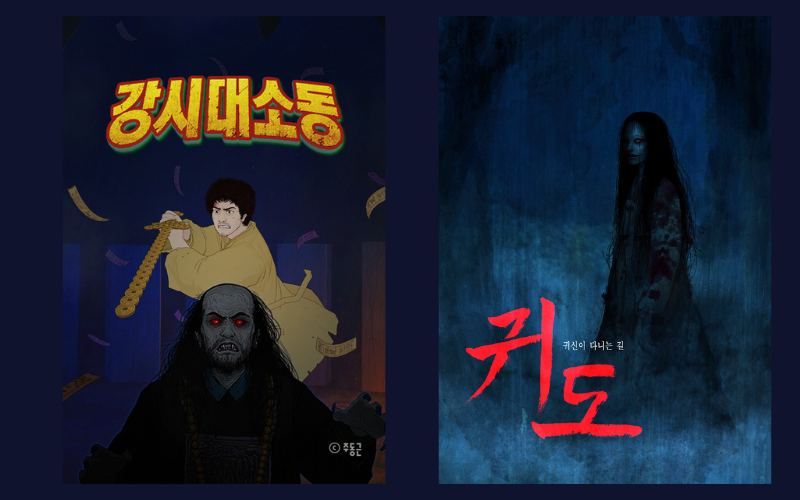
© Joo Dong-geun | WEBTOON
1. 'All of Us Are Dead' was published between 2009 and 2011. What pushed you to tackle a zombie apocalypse in a closed space like a high school?
Joo Dong-geun:
I think the starting point was quite simple, rather than a strategic choice. For me, the location didn't have capital importance. I wanted to tell a story I could do really well, in a space I knew intimately. When I mixed my personal experiences with fantasy, the school was the most logical choice. I also wanted to show adolescents growing stronger and proving they are much stronger than adults imagine.
2. In the work, intense fear coexists with emotional moments among students. Was this opposition intentional from the start?
Joo Dong-geun:
While creating, I couldn't help immersing myself as if I were a high schooler in that classroom trying to survive. Adolescents naturally count on adults, but during a catastrophe, when they realize adults face the same fear, their survival instinct activates. At first, they follow rules; later, they become warriors capable of surviving on their own, returning to ordinary teenagers at the end.
3. In 'Jiangshi Riot', you tackle the Chinese myth of the Jiangshi. Why choose this creature?
Joo Dong-geun:
I loved Jiangshis since I was a schoolboy. Unlike modern science-based zombies, the Jiangshi relies on occult elements. I grew up with 90s Hong Kong films, and when the genre faded after Hong Kong's handover, I felt frustrated and wanted to revive this flame. Talismans, blue skin, sticky rice, Taoist priests—it was a true playground for me.
4. 'Guido' consists of several short stories. Why choose the short format over a long narrative?
Joo Dong-geun:
'Guido' was my third project. My previous works exceeded 100 episodes and took over two years each. I wanted to try a shorter work, about six months of publication. It was my first anthology and my first 'effect-toon' where scrolling triggers animations. It took enormous time, but the warm reader feedback made it completely worth it.
5. 'Adonai' blends journalistic investigation and an extraterrestrial cult. Where does this genre evolution come from?
Joo Dong-geun:
After 'Guido', I took a year off. Walking with my wife, we saw a strange building. My imagination sparked: 'What if someone went in there and discovered a giant cult?' At the time, I was watching documentaries on cults which revolted me. Combining that with my long-standing desire to explore aliens, 'Adonai' was born.
6. How do you approach the creation of supernatural or horror universes?
Joo Dong-geun:
I must first be passionate myself. If an idea amuses me, I can develop it like a snowball. But if I feel nothing, I stop immediately. I refuse to do something similar to what already exists; I like offering readers narratives they have never heard before.
7. In the creative process, which moment brings you the most pleasure?
Joo Dong-geun:
Everything is fun in creation. Writing, characters, drawing. Drawing can be stressful when I can't express what's in my head, but when I succeed, it's euphoric. Still, the greatest pleasure remains the moment the final result appears.
8. Your works explore different forms of fear. What does 'fear' represent to you?
Joo Dong-geun:
I was a very fearful child. But visual horror was different. By watching it multiple times, I felt my courage grow with a pleasant chill. Watching horror is like training: you experience impossible real-life situations. Afterward, I feel my heart is stronger than yesterday.
9. 'All of Us Are Dead' received international attention. How do you experience this global success?
Joo Dong-geun:
During publication, I didn't imagine global distribution. I wanted a good Korean zombie film. After the end, studios wanted rights, but I was careful. Seven years later, the series was released on Netflix. I'm glad I held out. Today, I receive great support abroad and feel very happy.
10. Have you noticed differences between Korean and foreign readers' feedback?
Joo Dong-geun:
Yes, especially in timing. Korean readers have followed me for a long time; comments often talk about personal school memories like a family forum. Foreign readers arrived much later via Netflix; their feedback focuses more on the narrative itself, which is more stressful!
11. Is there a genre or theme you'd like to explore in the future?
Joo Dong-geun:
I have huge numbers of topics in mind, many stories ready. I'd like to choose themes rarely tackled in Korea to offer something truly new.
12. Any message for foreign readers discovering your work?
Joo Dong-geun:
Since 2009, I spent a lot of time in relative anonymity as a horror author, but I was happy. My goal is to become one of the reference horror manga authors in Korea. I hope my narratives bring you thrills, pleasure, and surprise. Thank you for your interest.
Transforming Fear into Narrative
An authentic artistic journey driven by curiosity, sincerity, and an unwavering passion for dark and visionary storytelling.