The Jeonju International Film Festival (JEONJU IFF) has long established itself as a vital pillar of the Korean independent cinema landscape. Rather than leaning into grand commercial spectacles, the festival focuses on providing a platform for works operating outside conventional distribution models, as well as for filmmakers pursuing quieter or more experimental approaches. Over time, this operational philosophy has forged a distinct identity: films screened in Jeonju are widely recognized for being selected not based on commercial viability, but on artistic exploration, perspective, and meaningful creative processes.
Each year, the festival presents works spanning various styles and characteristics, all unified by their willingness to explore formats and themes rarely seen in traditional programming. Some films embrace bold artistic risks, others unfold deeply personal narratives, and some experiment with unconventional narrative structures. By offering a space where these diverse attempts can exist on their own terms without being measured against mainstream standards, JEONJU IFF maintains a consistent commitment to supporting independent cinema.
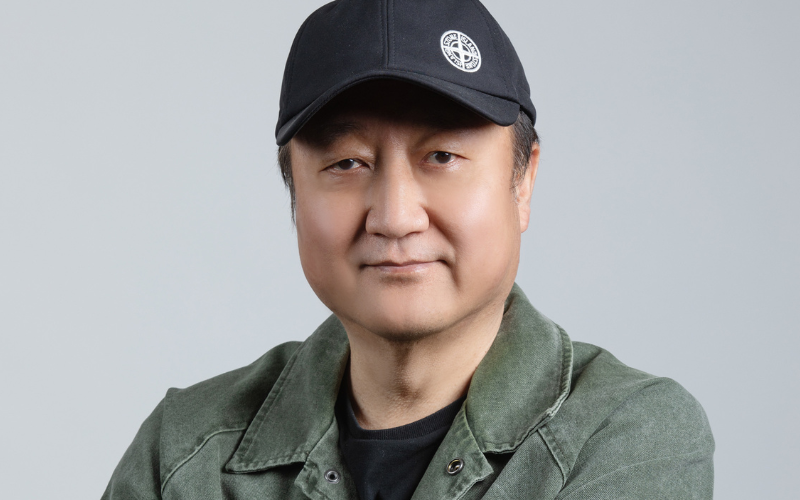
In this context, an online interview with Co-Director Min Sung-wook was conducted on August 11. The conversation offered detailed insights into the annual programming process, selection criteria, and the festival's ultimate objectives. Co-Director Min discussed the decisions required to maintain a festival unswayed by commercial logic, the practical challenges of safeguarding independent cinema, and the future role JEONJU IFF aims to play within the Korean cultural landscape.
1. Could you introduce the main direction and core curatorial intent of the Jeonju International Film Festival?
Min Sung-wook: “Since its inception, JEONJU IFF established its direction around three key pillars: digital, independent, and alternative cinema. As virtually all production environments have transitioned from film to digital, we have dropped 'digital' and now move forward primarily focusing on introducing independent and alternative cinema. Our programming is designed to support the fresh, uninhibited perspectives of creators while inviting audiences to actively engage with the social and artistic questions cinema raises.”
2. What was the central focus when building the 2026 program?
Min Sung-wook: “The festival's program is broadly divided into competitive and non-competitive sections, structured across various curated categories. This year, our central focus was on the spirit of avant-garde cinema, which we identified as a catalyst to revitalize the Korean film production landscape that has slowed down since the pandemic. Accordingly, our programmers introduced key figures and landmark works of 20th-century global avant-garde cinema across several sections, hoping that the spirit of past innovation would awaken the dormant energy within contemporary Korean film.”
3. What notable features or changes emerged in the International Competition and Korean Competition sections?
Min Sung-wook: “First, regarding International Competition, a structural change was introduced in submission policy: for the first time this year, we instituted an entry fee. While festivals like the Busan International Film Festival currently accept submissions without entry fees, we took a bold step forward. Although the overall number of submissions slightly decreased, it effectively eliminated non-serious entries and ensured that higher-quality works came through. In the Korean Competition section, the rise of documentary films was particularly striking. Out of 10 selected competition entries, four were documentaries, demonstrating remarkable momentum. Their impact went beyond sheer numbers—two of these documentaries won major awards, reflecting exceptional craftsmanship.”
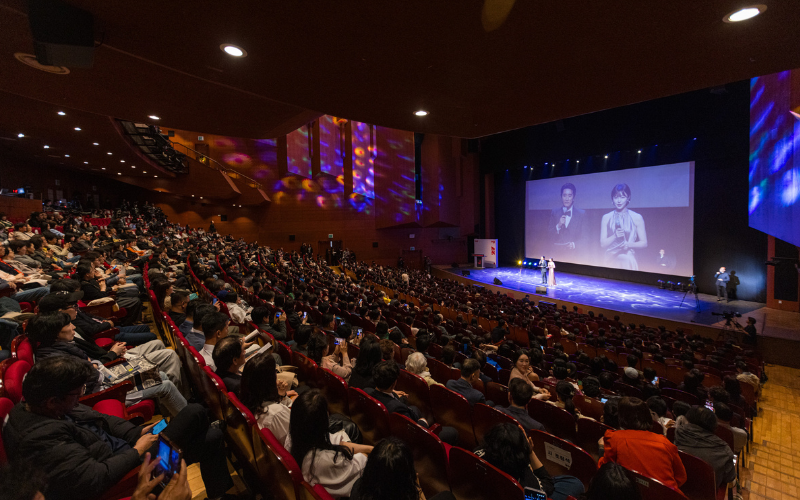
© Jeonju IFF
4. What sets JEONJU IFF apart from other international film festivals?
Min Sung-wook: “First and foremost is our unwavering identity rooted in independent and alternative cinema. Serving as a reliable stronghold and creative base for directors who explore new possibilities of cinematic language without giving in to commercial logic is Jeonju's distinct advantage. Second is our identity as a 'producing festival.' From the early days through projects like 'Digital Spectrum (Three Times Three),' we invested in films by acclaimed directors such as Bong Joon-ho, Hong Sang-soo, Jia Zhangke, Tsai Ming-liang, Apichatpong Weerasethakul, Shinya Tsukamoto, and Pedro Costa, hosting their world premieres. Through the ongoing 'Jeonju Cinema Project,' we invest in and present three or more feature films every year. We are a unique festival that doesn't just screen existing films, but actively invests in and produces them.”
5. What strategies do you employ to achieve international expansion while maintaining a core identity centered on independent and art cinema?
Min Sung-wook: “While the exact definition of 'international expansion' can vary, I believe that steadfastly maintaining our commitment to independent and artistic cinema is itself the most effective path toward expanding our reach both domestically and internationally. By staying true to our foundational philosophy while continually discovering and introducing new, experimental films, expansion occurs naturally.”
6. What was the greatest challenge while preparing for this year's festival?
Min Sung-wook: “In an era where streaming platforms have led more people to watch movies at home rather than visiting theaters, we constantly ask ourselves how many audience members will come to the festival. Cinema is inherently a spatial and temporal experience—a collective gathering in a theater to share emotional bonds and engage in diverse interpretations. It is disheartening to see these shared connections diminish. Having audiences visit the festival, watch films, and engage in meaningful discussions with creators remains our primary goal. Preparing a fresh and compelling selection to encourage that engagement was our greatest challenge, and we are deeply grateful to the many audience members who responded and participated.”
7. What direction does JEONJU IFF hope to demonstrate to international audiences moving forward?
Min Sung-wook: “While introducing global audiences to new Korean cinema is valuable, we also hope the festival serves as a platform where audiences can engage with a diverse array of global independent films, allowing ideas to collide freely and solidarity to build. Beyond simple viewing, our hope is to be a vital conduit where filmmakers and international audiences share contemporary concerns through the medium of cinema.”
8. Have there been any new attempts in terms of festival management and international co-productions?
Min Sung-wook: “Through our 'Jeonju Cinema Project,' we produce one or more international co-productions each year. These co-produced films have earned major international acclaim: Director Lois Patiño's Samsara won the Special Jury Award in the Encounters section at the 2023 Berlin International Film Festival, and the following year, Director Ben Russell's Direct Action won Best Film in the same section at Berlin in 2024. This year, Director Lisandro Alonso's Eureka was invited to the Directors' Fortnight at the Cannes Film Festival and will be screened at JEONJU IFF next year. While previous co-productions were shot abroad, Director Tsai Ming-liang's upcoming installment in his Walker series—scheduled for its world premiere at next year's JEONJU IFF—will be filmed in Jeonju this autumn. As this marks our first domestic production, expectations are exceptionally high, and we will provide full support to ensure seamless execution.”
9. What long-term vision or goals does the Jeonju International Film Festival aspire to achieve?
Min Sung-wook: “Rather than being an event that lasts for just ten days, JEONJU IFF aspires to be a year-round central hub for a sustainable independent film ecosystem that discovers, nurtures, and supports creators. We hope to serve as the most liberating laboratory for filmmakers and a welcoming, inspirational home where audiences return every year to discover new cinematic perspectives.”
Visit Jeonju International Film Festival
Explore the official festival website:
Official Website