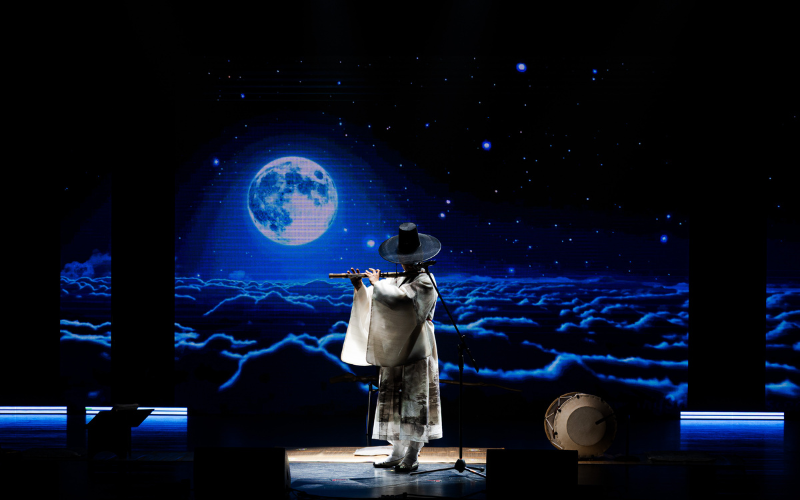
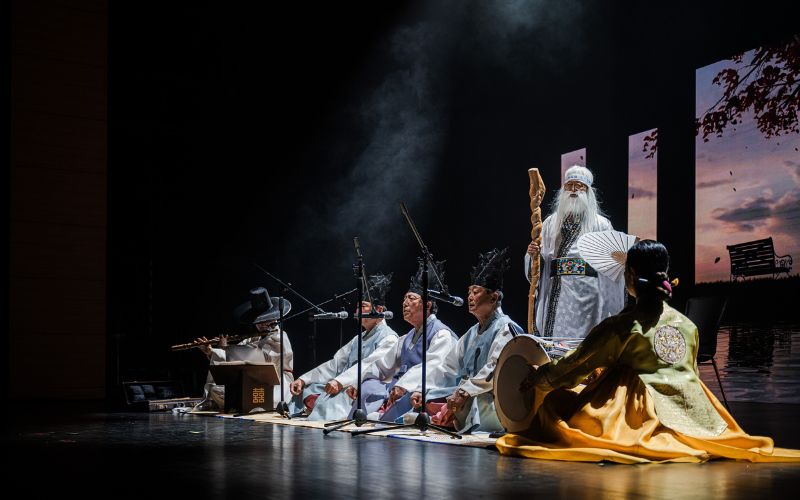
An insightful exchange with Hongje Kim Suho, a master of the daegeum who brings the resonant voice of Korean traditional music to audiences across the world. Shortly after performing in Paris for the 140th anniversary of diplomatic relations between Korea and France, he shared his background, artistic philosophy, and vision.
This interview with daegeum performer Hongje Kim Suho was conducted by email on July 15 from Luxembourg, shortly after his participation in the official events celebrating the 140th anniversary of diplomatic relations between Korea and France. In recent weeks, he performed on a special stage at Île Saint‑Louis and at a cultural event hosted by Paris’s 13th arrondissement, presenting Korean traditional music to audiences discovering the daegeum for the first time.
Through this written exchange, Kim Suho reflected on his artistic background, his training in the Lee Saenggang-style Daegeum Sanjo, and the experiences that shaped his identity as a musician. He also shared the philosophy behind his work, the emotions he hopes to convey, and the meaning he finds in bringing Korean traditional music to audiences both in Korea and abroad.
Q1. Could you briefly introduce yourself and your artistic background?
Hongje Kim Suho:“My name is Hongje Kim Suho, and I am a daegeum performer based in Andong, one of Korea’s most historically rich cities. I perform throughout Korea and internationally, sharing the beauty of Korean traditional music with audiences around the world. I run the Woryeong Daegeum Institute and my YouTube channel The Man Who Plays the Daegeum, where I introduce traditional music to a wider audience. I studied Lee Saenggang-style Daegeum Sanjo, connected to Korea’s National Intangible Cultural Heritage No. 45, and I serve as an official daegeum accompanist of the Korea Sijo Association. I have received several national awards, including the Grand Prize at the 2022 Hallyu Culture Awards. Recently, I performed in France for the 140th anniversary of diplomatic relations between Korea and France, which was a meaningful milestone in my career.”
Q2. What inspired you to pursue your artistic path?
Hongje Kim Suho:“The daegeum carries the performer’s breath, emotions, and spirit. As I continued performing, I realized that although Korean traditional music is one of our greatest cultural treasures, many people still find it unfamiliar. That inspired me to explore new ways of connecting traditional music with modern audiences. Today, I perform not only traditional daegeum repertoire but also familiar Korean songs, film soundtracks, and contemporary works. When people hear melodies they already know, they naturally become curious about the daegeum. For me, preserving tradition means allowing it to grow with today’s listeners.”
Q3. How would you describe your artistic identity?
Hongje Kim Suho:“I see myself as an artist who connects tradition with the present. The daegeum has a history of more than 1,300 years and is one of Korea’s most representative traditional instruments. To me, it is the voice of nature—the sound of the wind and the human heart. I believe its sound can transcend language and culture. Alongside traditional repertoire, I perform familiar songs and film music so audiences can experience Korean traditional music in a fresh and meaningful way. One of the most unforgettable experiences in my career has been seeing audiences, both in Korea and overseas, moved to tears while listening to the daegeum. Those moments remind me that music speaks to the heart long before words ever can.”
Q4. A memorable moment in your career?
Hongje Kim Suho:“My experiences performing overseas remain the most meaningful. In Italy, many people who had never heard the daegeum were deeply moved. After nearly every concert, audience members approached me saying, ‘Amazing!’ Their reactions gave me confidence that Korean traditional music can resonate internationally. Another unforgettable moment took place in Andong during a special performance for distinguished guests from Israel. Their country was going through a difficult period because of the ongoing war. Without announcing it beforehand, I performed the Israeli national anthem on the daegeum as a gesture of respect, followed by a piece expressing a child’s longing for his father. Several guests were moved to tears. Watching their emotional response reminded me once again that music has the power to comfort people beyond language, nationality, and culture. This year, I experienced the same feeling again in Paris while performing as part of the celebrations marking the 140th anniversary of diplomatic relations between Korea and France. Seeing audiences connect so deeply with the daegeum reaffirmed my belief that Korean traditional music can touch hearts anywhere.”
Q5. Upcoming projects?
Hongje Kim Suho:“I am expanding my work through performances, education, and cultural exchange programs. Many people overseas ask if they can learn the daegeum, so I hope to offer workshops and educational programs abroad. I also want to create original compositions that express contemporary emotions while highlighting the unique sound of the daegeum. Until now, I have introduced the daegeum through traditional music, popular songs, and film soundtracks. Moving forward, I want to compose music that reflects the unique sound of the daegeum while expressing contemporary emotions. Through these original works, I hope to show that Korean traditional music continues to evolve while remaining true to its roots.”
Hongje Kim Suho:“I hope my music brings comfort, peace, and hope. I have seen people close their eyes, smile, and even shed tears while listening to the daegeum. In those moments, language becomes unnecessary. Music speaks directly to emotion. If someone leaves feeling inspired or curious about Korean culture, I feel I have fulfilled my role as an artist.”
Q7. Message to young artists?
Hongje Kim Suho:“Art is not only about technique—it is about touching hearts. I hope young artists respect tradition while finding ways to communicate with today’s audiences. Tradition grows when each generation breathes new life into it. To young artists who dream of performing internationally, I would simply say: believe in your own culture. Korean traditional culture possesses remarkable artistic value and timeless beauty. If you perform with sincerity, people will respond.”
Q8. Your recent performance in Paris?
Hongje Kim Suho:“Performing in Paris was a great honor. I performed at Île Saint‑Louis and at a cultural event hosted by Paris’s 13th arrondissement. Although we spoke different languages, I felt the audience’s full attention. Including familiar melodies helps audiences discover the beauty of the daegeum. Paris reaffirmed that Korean traditional music can resonate anywhere.”