Colors of Korea stands out immediately when you step into the Korean Cultural Center in Paris. The exhibition doesn’t try to overwhelm the visitor; instead, it invites you to slow down and pay attention to how color becomes a language. On June 29, 2026, I visited the Center to explore how contemporary Korean artists reinterpret the traditional Obangsaek palette — five symbolic colors that have shaped Korean aesthetics for generations.
The exhibition moves between mediums with ease: paintings inspired by traditional garments, digital installations that respond to movement, and sculptural works that play with texture and light. Each piece offers a different way of approaching color, whether through heritage, experimentation, or a blend of both. Walking through the rooms, it becomes clear that the exhibition is not only about color, but about how artists connect past and present through it.
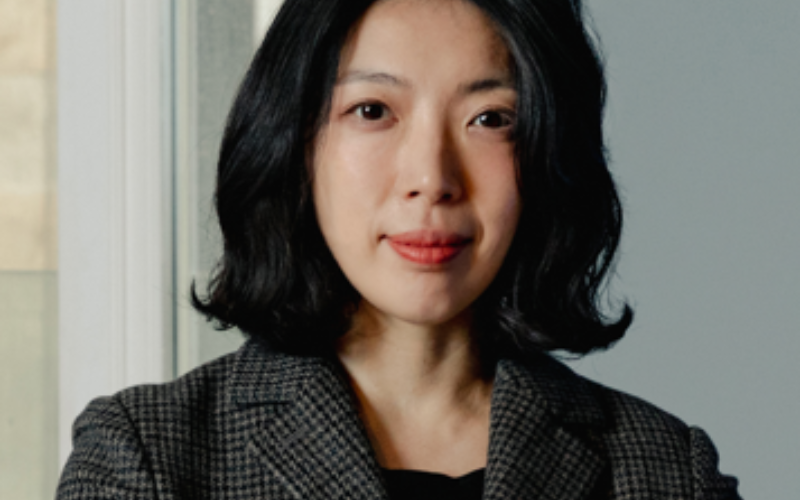
On the day of my visit, Ms. Haeyoung‑Yoomine KIM, the Exhibition Curator, was managing several responsibilities related to the Center’s programming and could not conduct an in‑person interview. Despite her busy schedule, she kindly agreed to answer my questions by email. The interview took place on June 25, 2026, between Luxembourg and Paris.
1. Could you briefly introduce the mission of the Korean Cultural Center in Paris?
Haeyoung‑Yoomine KIM: The Korean Cultural Center in Paris aims to promote Korean culture in France and strengthen cultural exchanges between the two countries. Established in 1980, it reached a major milestone with the opening of the new Paris Korea Center in 2019. As the first Korea Center in Europe, it now serves as a cultural hub bringing together, under one roof, the Korean Cultural Center, the Korea Tourism Organization, the Korea Creative Content Agency (KOCCA), dedicated to cultural industries such as Hallyu, video games and webtoons, as well as the King Sejong Institute, responsible for teaching the Korean language. Located in a 3,678 m² building spread over seven floors, the Center includes exhibition halls, an auditorium, multipurpose spaces and a culinary studio. Each year, it organizes nearly 180 cultural programs covering visual arts, performing arts, cinema, literature, heritage, gastronomy and new technologies. Beyond promoting Korean culture, our ambition is to make the Center a place of encounter, dialogue and cooperation between artists, institutions and audiences from both countries, fostering mutual understanding through culture.
2. What makes the exhibition “Colors of Korea” unique this year?
Haeyoung‑Yoomine KIM: This exhibition is particularly significant as it is part of the celebration of the 140th anniversary of diplomatic relations between Korea and France. For this occasion, we wanted to present not only a major exhibition of contemporary Korean art, but also a project that reflects the vitality of artistic exchanges between our two countries. The exhibition is built around the Obangsaek, the five traditional Korean colors, which form one of the foundations of Korean aesthetics. More than a chromatic theme, they express a worldview rooted in Eastern philosophy, where colors represent relationships between nature, time, space and human beings. Through this lens, the exhibition explores how contemporary artists reinterpret this cultural sensibility today. Featuring 34 major artists, from the 1980s to the present, it offers a journey through painting, sculpture, photography, installation and digital art. This diversity of generations and mediums shows that contemporary Korean art is not defined by a single style, but by a plurality of expressions that engage both with cultural heritage and universal issues. The exhibition is also the result of close collaboration between many Korean and French institutions, including the National Museum of Modern and Contemporary Art (MMCA), Korean and French galleries, and several cultural partners. It is also part of the official program of the Némo Biennale, France’s leading biennale dedicated to digital arts. Beyond presenting major artists, our ambition is to make this exhibition a space for dialogue and cooperation, strengthening long‑term connections between artists, galleries and cultural institutions in Korea and France.
3. How did you select the artists and works presented?
Haeyoung‑Yoomine KIM: We wanted to bring together artists from several generations — pioneers of Korean contemporary art, established figures and emerging creators — to offer both a historical and dynamic vision of Korean artistic creation. The selection was not based solely on reputation. We chose works capable of engaging with the exhibition’s theme, the Obangsaek, and showing how a deeply rooted cultural sensibility can be reinterpreted today through diverse artistic languages. The selection was developed in close collaboration with various artistic institutions, galleries and partners in Korea and France. This collaborative approach reflects the spirit of the 140th anniversary of diplomatic relations, which aims to encourage artistic exchanges and cultural cooperation between the two countries. The exhibition places different generations of artists side by side to show that, despite the diversity of practices, mediums and aesthetic approaches, a shared sensibility runs through contemporary Korean art. More than a succession of works, it creates a dialogue between generations, techniques and perspectives.
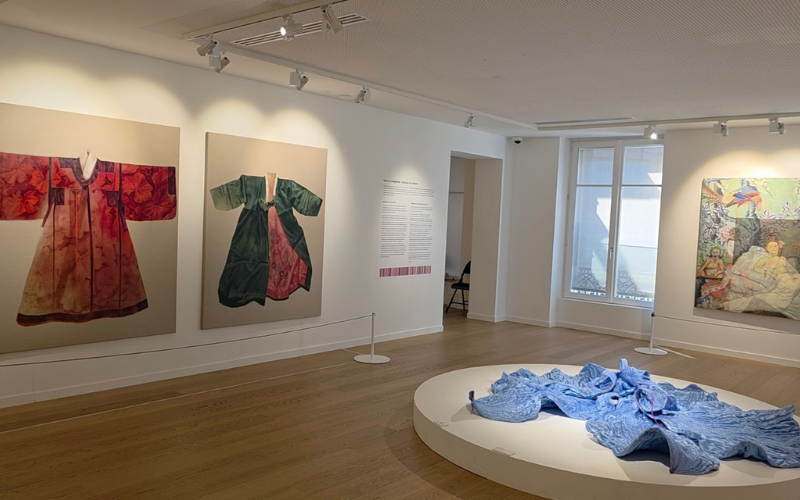
Exhibition interior view © Jason Edwards
4. What message would you like visitors to take away from the exhibition?
Haeyoung‑Yoomine KIM: The Korean Cultural Center welcomes a very diverse audience, with visitors of all ages and backgrounds. Many first discover Korea through K‑pop, dramas, cinema or gastronomy, which play a major role in the country’s cultural visibility. With this exhibition, we wanted to offer another entry point: contemporary art. Our ambition is to broaden the perception of Korea and show that artistic creation is also a key part of its cultural identity. Beyond the works themselves, we hope visitors will discover a creative, open and constantly evolving Korea. The artists address universal themes such as identity, memory, nature, technology and social transformation. Even when their works are rooted in a Korean context, they resonate with questions that concern us all. I hope visitors leave with the feeling of having discovered another facet of Korea — a culture that preserves its heritage while continually reinventing itself.
5. In your view, what role does contemporary Korean art play in promoting Korean culture abroad?
Haeyoung‑Yoomine KIM: I believe contemporary art plays an essential role in Korea’s international cultural presence. While K‑pop, cinema and dramas have introduced millions of people to Korea, contemporary art offers a different, more sensitive and reflective approach. Art has a unique ability to transcend language barriers. A work can evoke emotions, spark dialogue and create mutual understanding without translation. Through their creations, Korean artists address universal concerns while expressing a sensibility shaped by their history, culture and experiences. But its role goes beyond cultural visibility. Exhibitions, artist residencies and collaborations between museums, art centers and galleries create long‑term relationships between institutions and professionals in both countries. They foster the circulation of works, ideas and artistic practices. To me, contemporary art is not just a cultural tool — it is a language of dialogue, capable of bringing societies closer, nurturing curiosity and building lasting cultural cooperation.