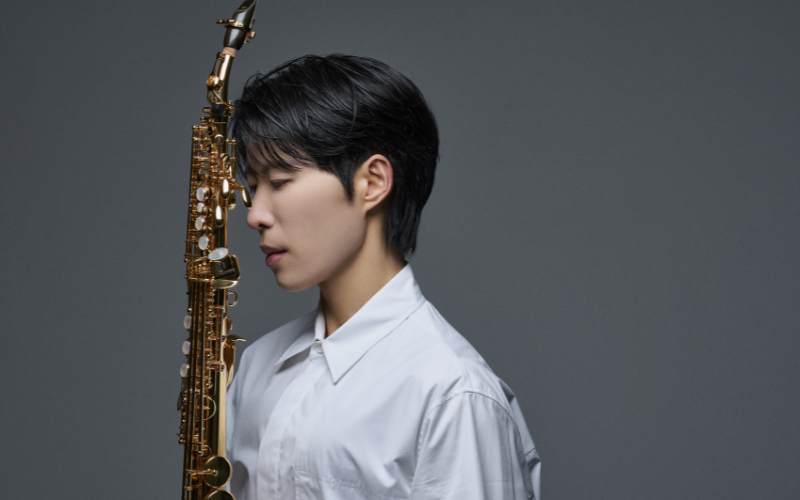
An intimate conversation exploring the backstage of a global career built on discipline, philosophy, and the pursuit of space and sincerity within classical music. I conducted this digital interview with Brandon Jinwoo Choi from Seoul on July 13, 2026. Before we began, I already had a personal connection to his world: I’ve always enjoyed concerts where the atmosphere, the orchestra, and the soloist create something more than a performance — a space where the audience can feel the music breathing. It’s a style of concert I’ve loved for years, and Brandon is one of the artists who embodies it most naturally.
Speaking with him didn’t feel like a formal interview. It felt more like entering the backstage of his artistic life — the place where his choices, his discipline, and his philosophy take shape. Brandon has built a career across France, the United States, and Korea, but what struck me most during our conversation was how consistently he returns to the same foundation: breath, silence, and sincerity.
Throughout our discussion, he shared his journey, his way of interpreting music, and the projects he is preparing. What follows is the full interview, in his own words.
Q1. For readers discovering you for the first time, could you introduce yourself and share your background as a classical saxophonist?
Brandon Choi: “Hello, I’m Brandon Choi, classical saxophonist and writer. I completed the highest performance program at the Conservatoire National Supérieur de Musique de Lyon, and later earned my master’s and doctoral degrees at the University of Cincinnati as the youngest full‑scholarship recipient. I won first prize at the Cincinnati International Competition and second prize at the MTNA International Competition, and became the first Korean classical saxophonist to give a solo recital at New York’s Lincoln Center. I have performed with Sumi Jo, conductor Han‑Na Chang, the Cincinnati Symphony Orchestra, the KBS Symphony Orchestra, and the National Symphony Orchestra of Korea. My albums include Beethoven, Rachmaninoff, and Winter Serenade. I am an international artist for Yamaha and D’Addario, currently teaching at Seoul National University and serving as president of the Korean Classical Saxophone Association. Recently, I published my first essay, The One Who Quietly Continues, meeting readers through writing as well as music.”
Q2. What led you to choose the saxophone and classical music?
Brandon Choi: “I didn’t choose the saxophone — there was a moment when the saxophone recognized me. On my first day of high school, I heard the sound of the saxophone from the wind orchestra. It wasn’t just ‘beautiful’; it felt like myself. Classical music came naturally. The saxophone was originally invented for classical music, but because it arrived after the golden age of the genre, it remained a ‘guest’ on classical stages for nearly 200 years. I wanted to restore its rightful place.”
Q3. How would you describe your musical identity and interpretive approach?
Brandon Choi: “I would describe myself as a performer who ‘thinks through breath’. Among wind instruments, the classical saxophone reflects human breathing most directly. I treat this not as technique, but as a way to carry life into music. I pursue subtraction rather than display — asking why each note must exist. During a premiere at Lincoln Center, the piece contained more rests than notes. Filling that silence defined the entire work. This approach aligns with Korean aesthetics: space, breath, and quietness.”
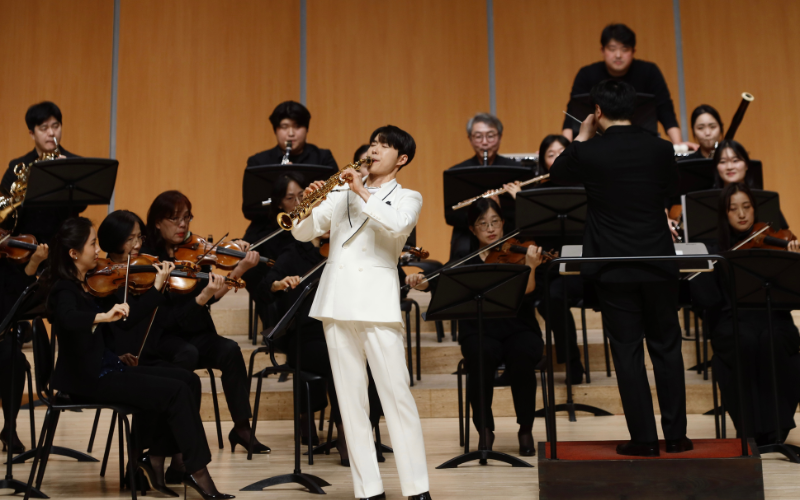
© Brandon Jinwoo Choi
Q4. Are there particular moments in your career that remain unforgettable?
Brandon Choi: “Three moments stand out. My solo recital at Lincoln Center — a historic turning point for Korean classical saxophone. My collaboration tour with Sumi Jo — a lesson in humility and artistic attitude. And a three‑minute silence on stage, where I realized that music also lives in stillness.”
Q5. What performances or projects are you currently preparing?
Brandon Choi: “I am working in three directions: – Concerts in Korea and abroad, including the annual performance of the Brandon Saxophone Orchestra. – A composer‑focused album series, continuing the path opened by Beethoven, Rachmaninoff, and Winter Serenade. – Writing, with my recently published essay exploring the intersection of art and neuroscience. I also run a cultural space called Atmosphere, who I host monthly meditation concerts.”
Q6. What message or emotion do you hope to convey to audiences through your music?
Brandon Choi: “I want to offer a moment where listeners rediscover their own breath. We live too fast. Music is honest — breath cannot lie. If someone can reconnect with their inner rhythm during my performance, then the music has fulfilled its purpose.”
Q7. What would you like to say to young musicians in Korea and abroad?
Brandon Choi: “Three things: – Don’t fear your own path. – Protect your breath; protecting your body is protecting your art. – Go out into the world, but don’t forget your roots. Your identity is your strength.”
Speaking with Brandon Choi reveals an artist who approaches music not only as sound, but as a form of reflection — a way of breathing, pausing, and understanding oneself. His career spans continents, orchestras, and disciplines, yet his philosophy remains grounded in sincerity and introspection. For those who, like me, cherish concerts where silence, atmosphere, and emotion shape the experience, Choi’s work offers a rare and meaningful perspective on what classical music can be today.